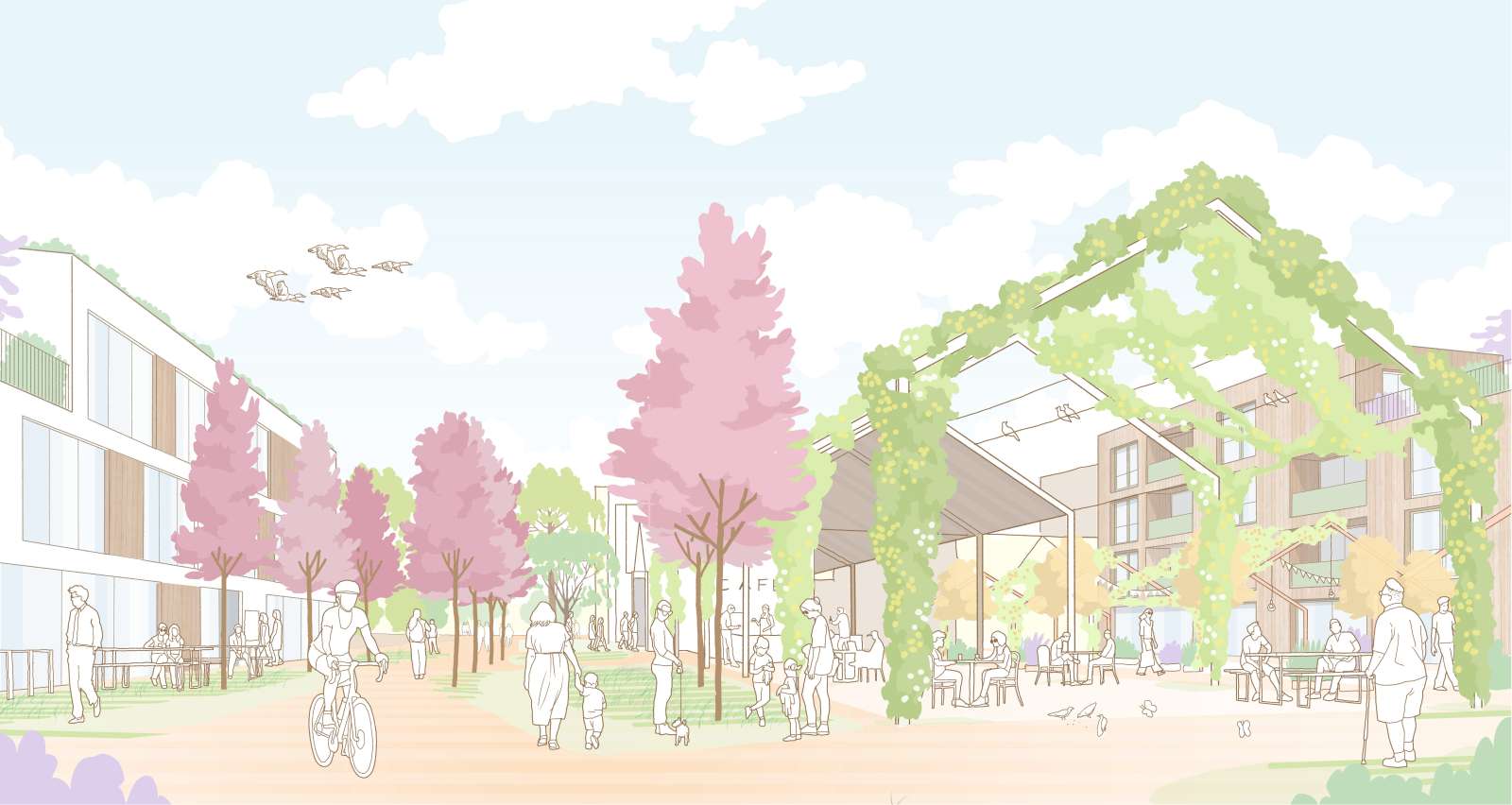
On the site of the former municipal nursery, a socio-ecological neighborhood is taking shape that explores new ways of living together and closely integrates the city with the surrounding landscape. The concept views the city as part of nature—as a habitat for people, animals, and plants—and builds on this to create a diverse, community-oriented neighborhood with public amenities and strong ties to the surrounding area.
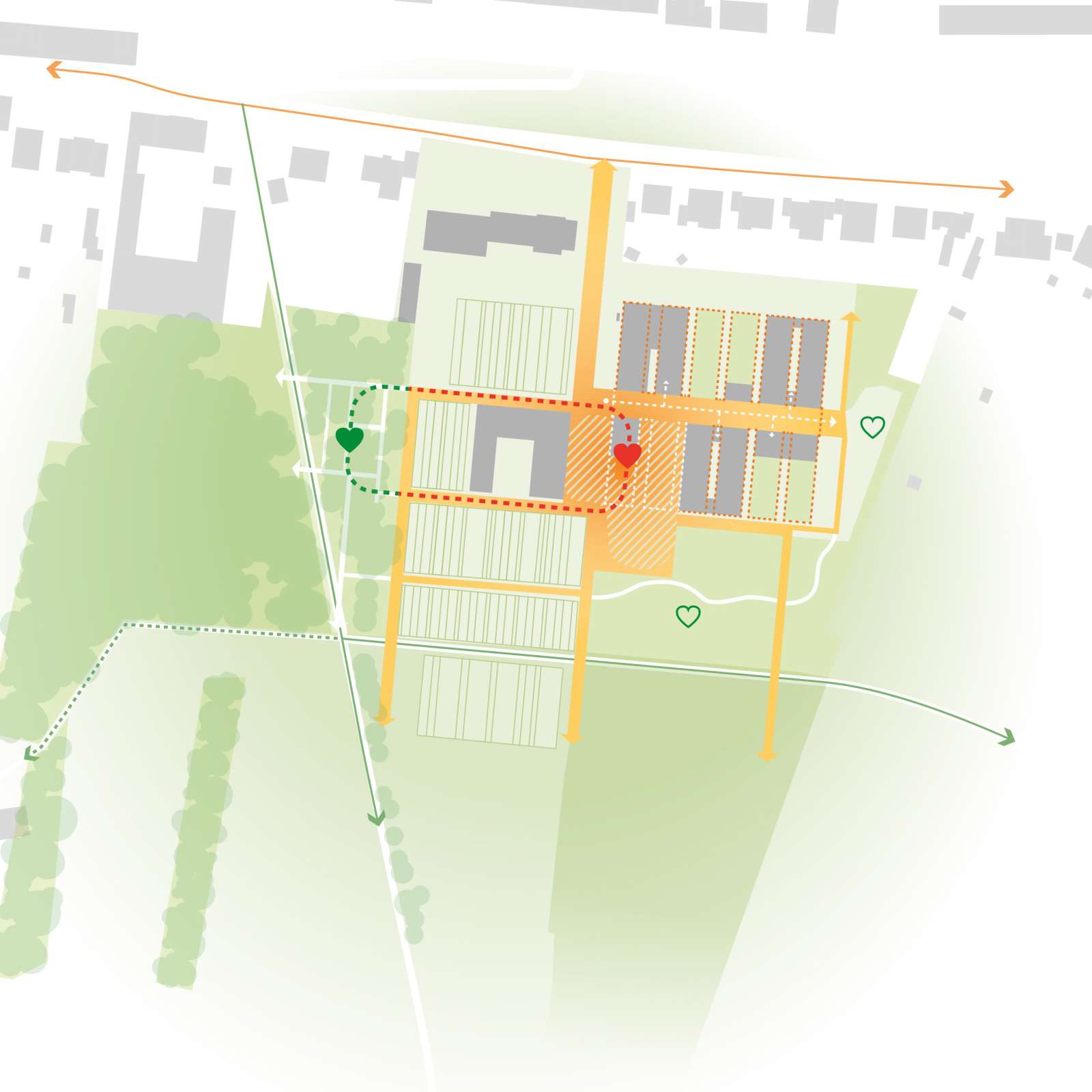
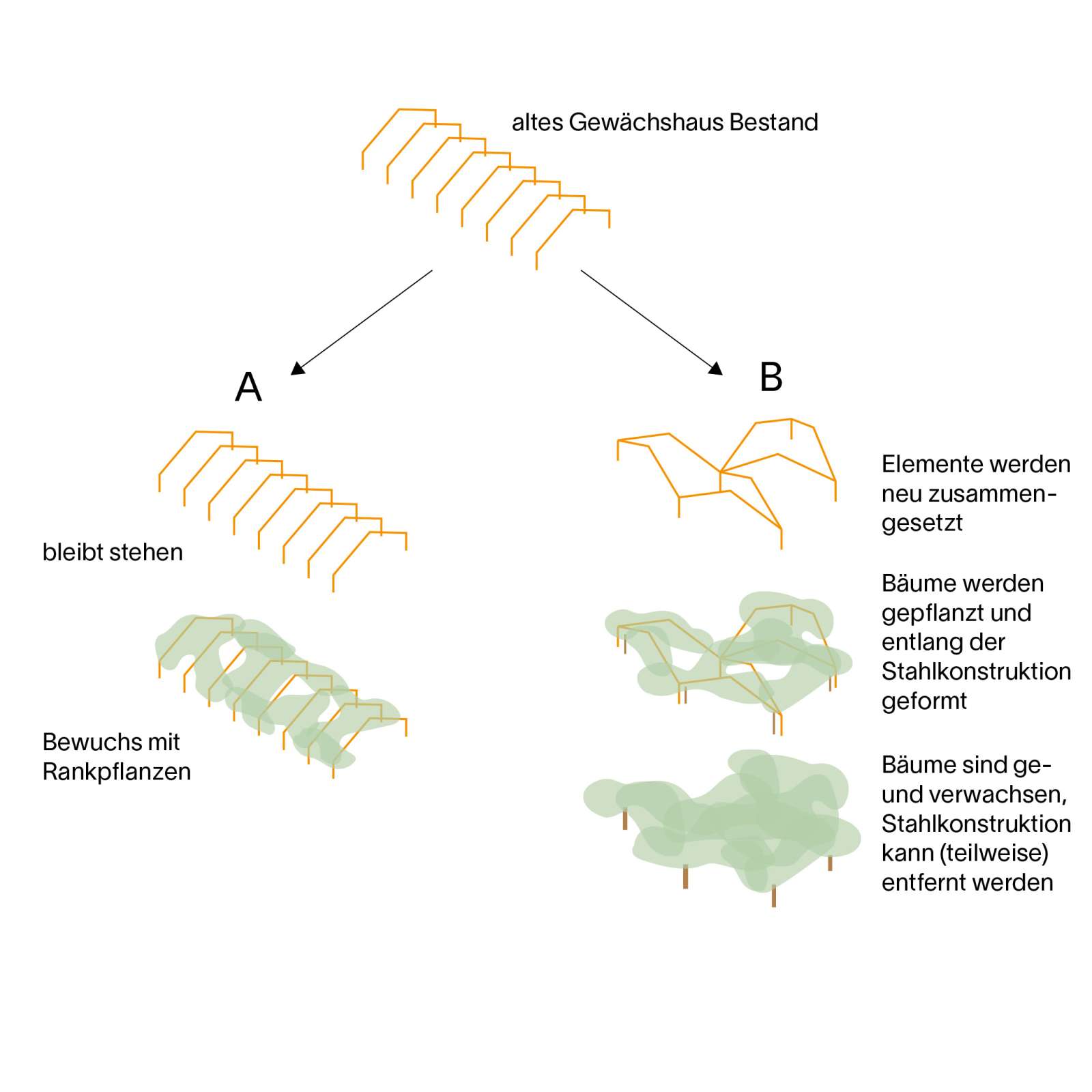
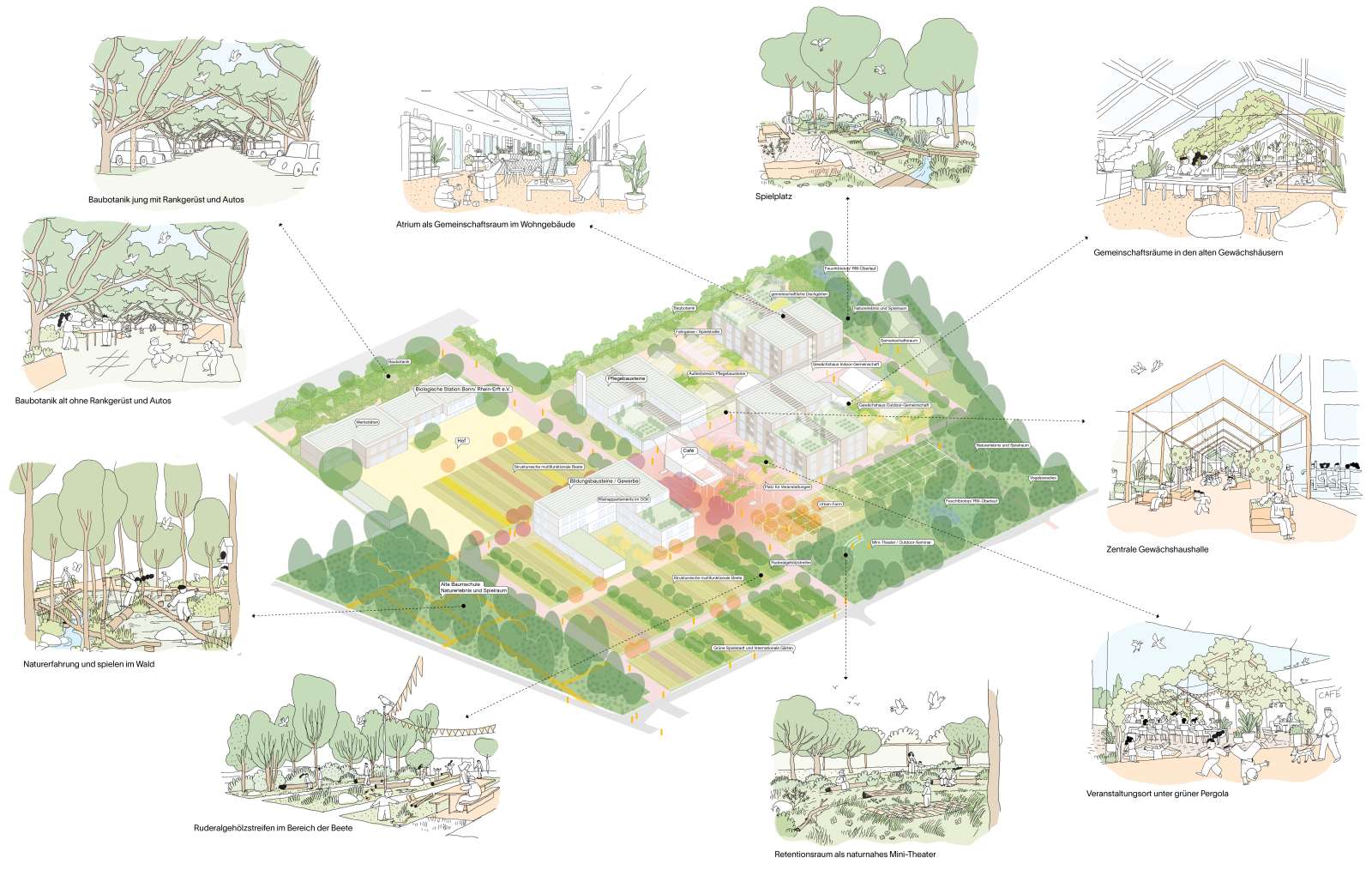
The urban structure deliberately builds on the existing fabric and further develops its architectural and landscape qualities. The existing urban wilderness will be preserved, developed in a nuanced way, and supplemented with new uses. This will create a system of open spaces with high ecological diversity and a variety of opportunities for recreation and social interaction—ranging from open gardens and plazas to shared greenhouses serving as covered open spaces.
A central strip of open space forms the backbone of the neighborhood, connecting residential, care, educational, and work spaces as well as community facilities. The development is organized into clearly defined levels of public access, allowing for a close coexistence of private, communal, and public spaces.
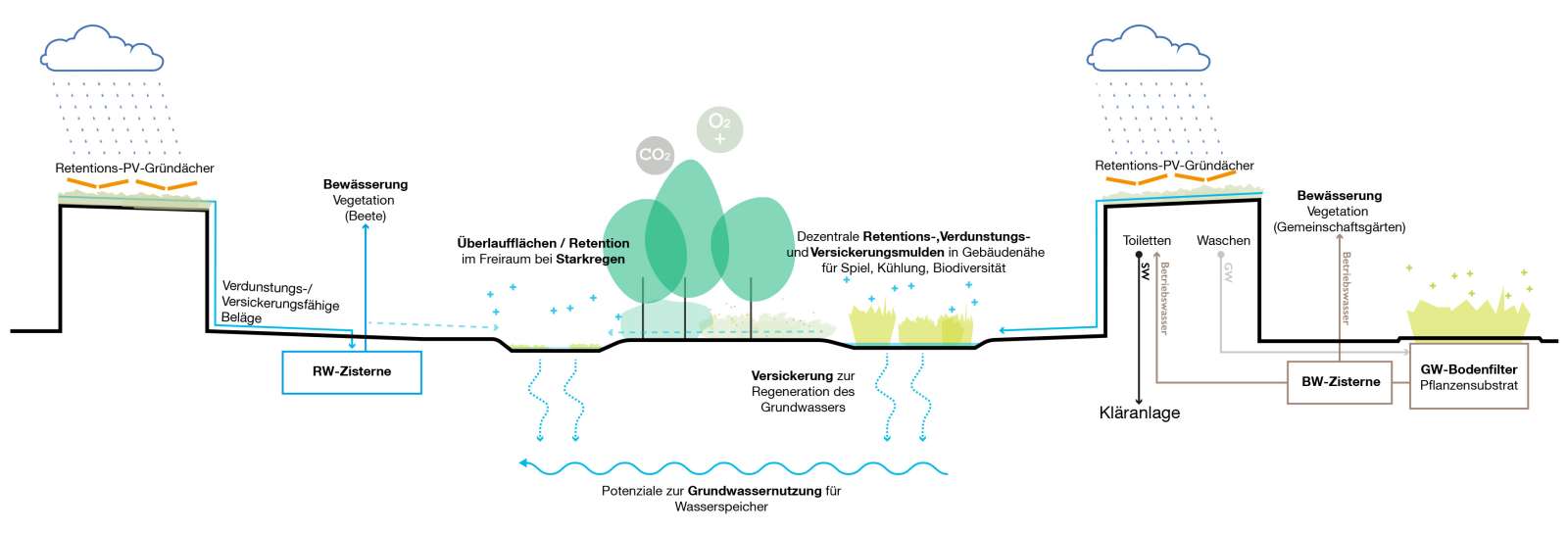
The neighborhood is designed as a "sponge city": rainwater and greywater are collected, treated, and reused on-site. A low-car mobility concept, connectivity to the surrounding network of paths, and innovative bio-architectural structures define the project’s sustainable and experimental character.
Project
Competition Zukunftsort Dransdorfer Berg
What
Competition
Where
Bonn, GER
When
2025
Competition Zukunftsort Dransdorfer Berg
What
Competition
Where
Bonn, GER
When
2025
In cooperation with
Studio Animal Aided Design