Cities offer their residents a wide range of cultural activities and a robust social infrastructure. At the same time, the negative consequences of high building density are becoming increasingly apparent: climate change and the lack of green spaces and natural areas are becoming more and more noticeable. Extreme weather events such as heat waves, droughts, and heavy rainfall are on the rise, while the ongoing loss of natural habitats continues to restrict the living space for plants and animals.
To make cities livable and resilient in the long term, climate adaptation and biodiversity must be considered together. Green spaces near buildings and green facades play a key role in this regard. Through natural evaporation processes and evapotranspiration, they improve the microclimate and air quality, positively influence the local water balance, and increase humidity at ground level. At the same time, they provide shade for building facades and help reduce urban heat islands and overheating in indoor spaces.
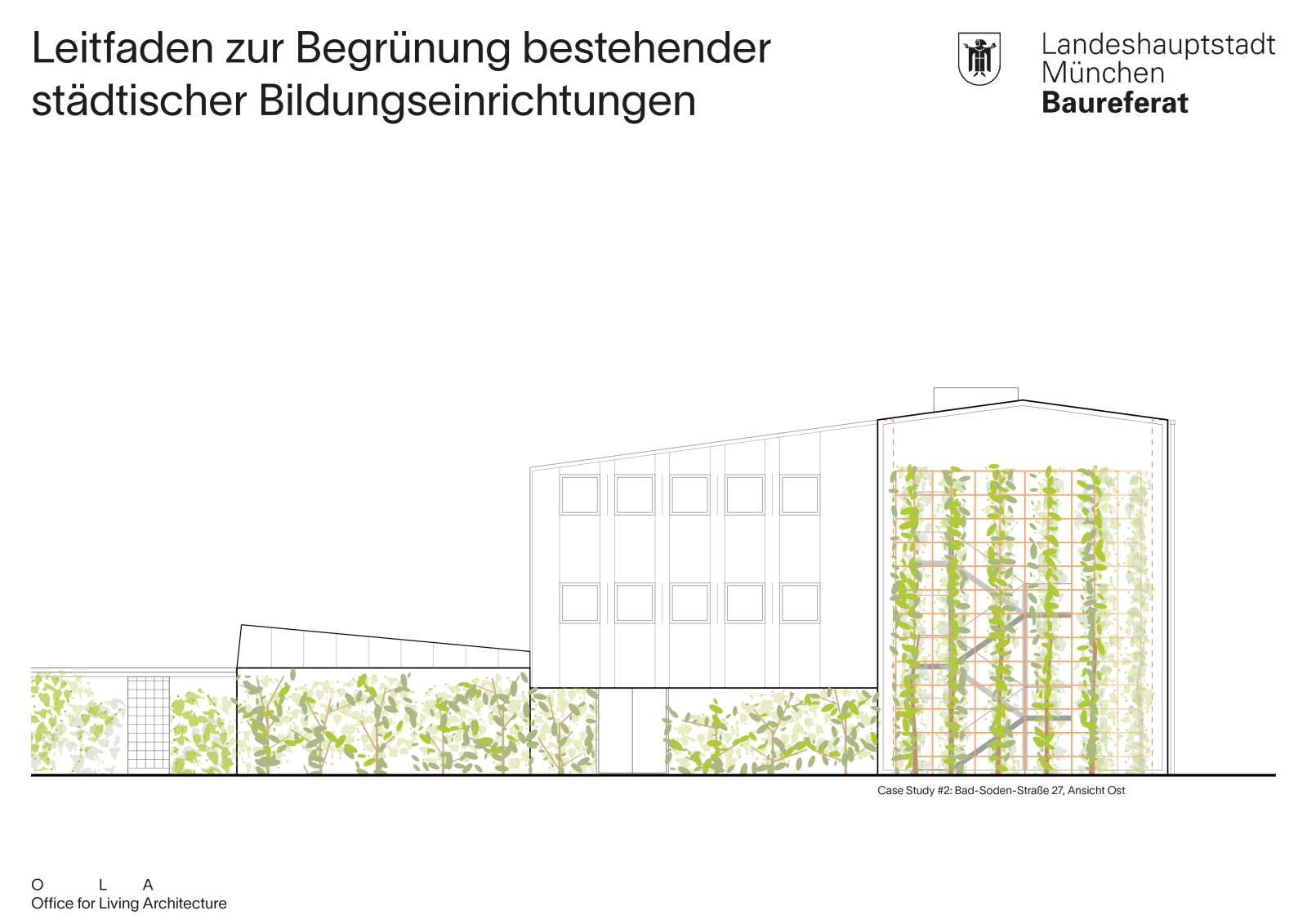
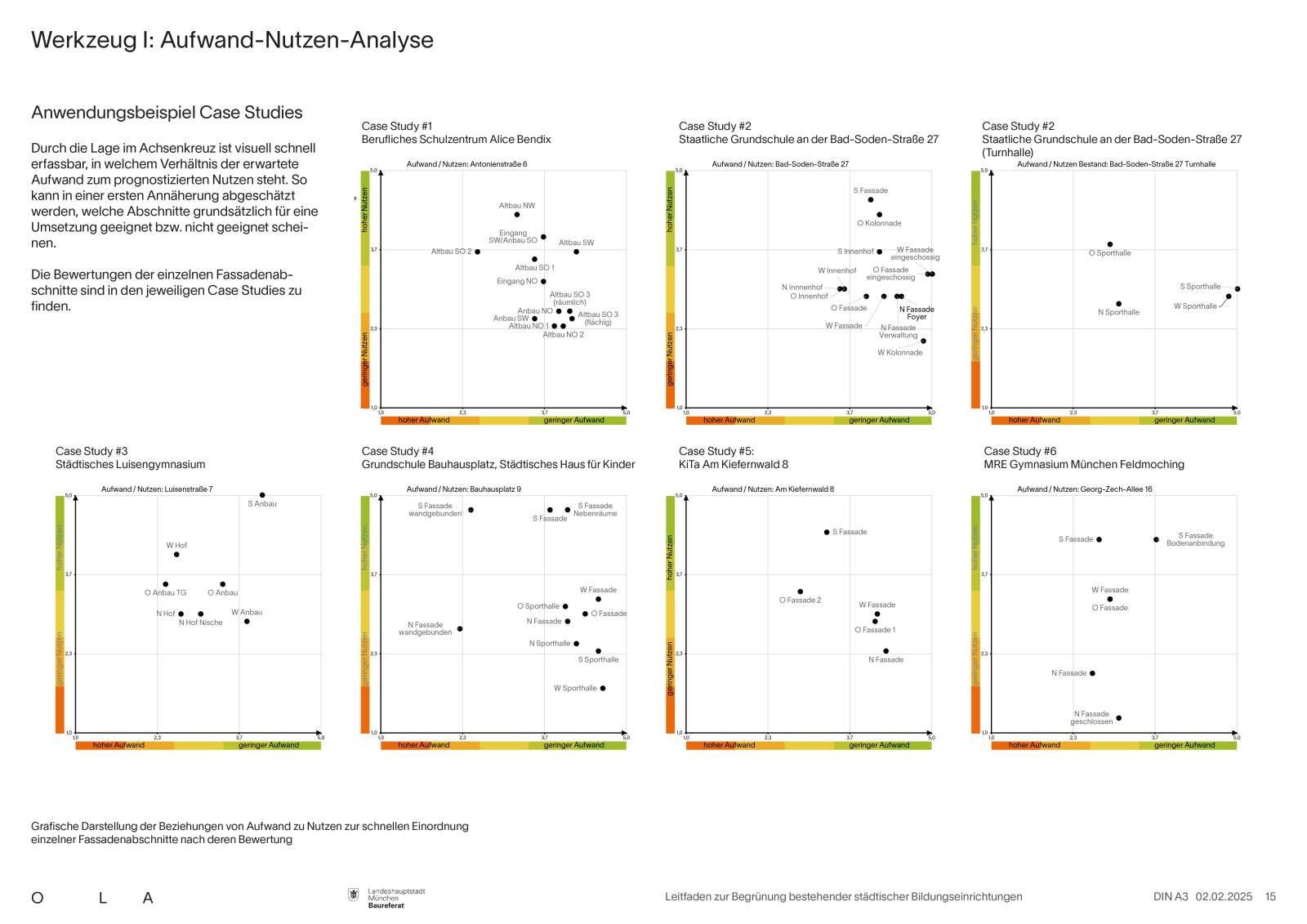
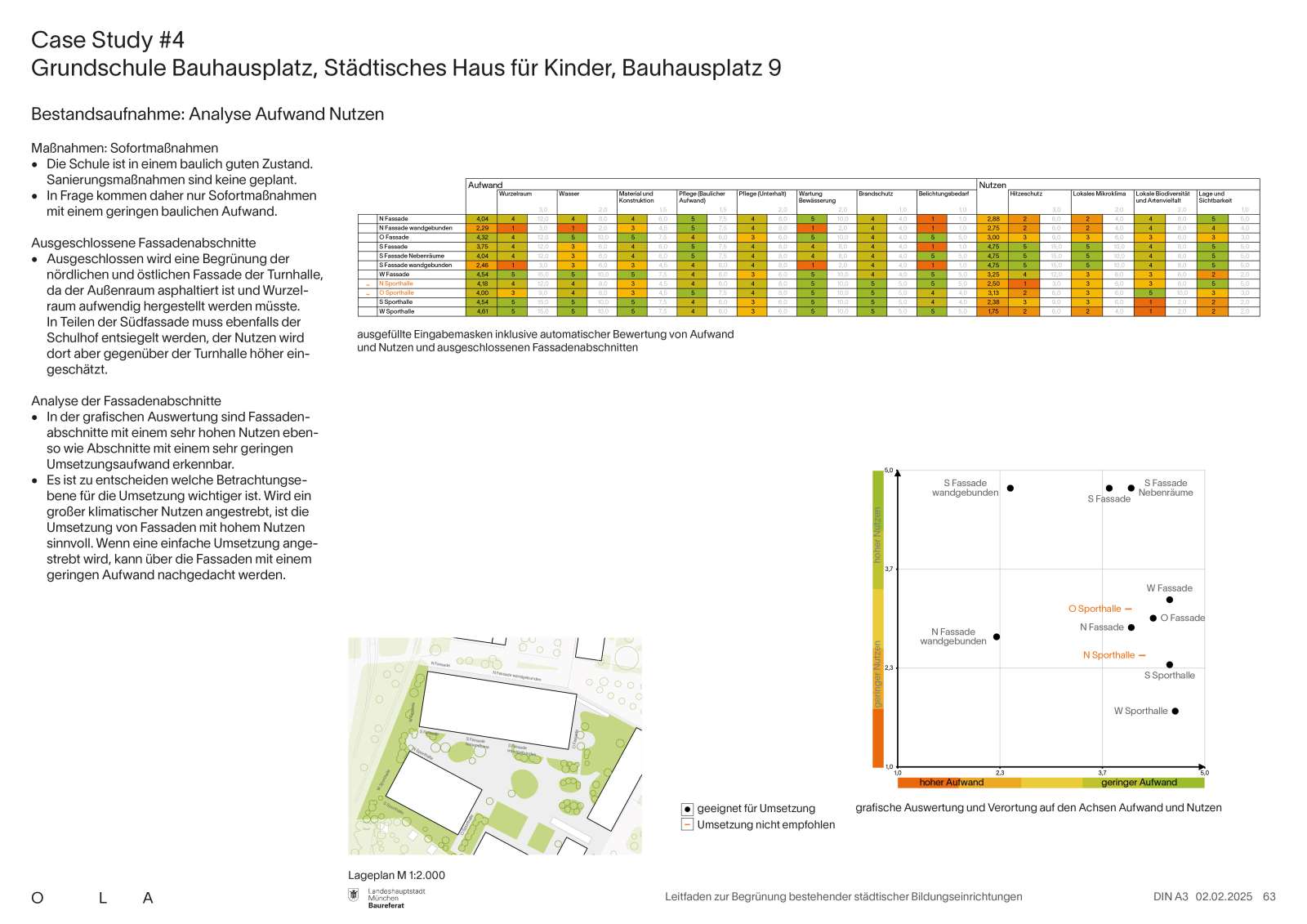
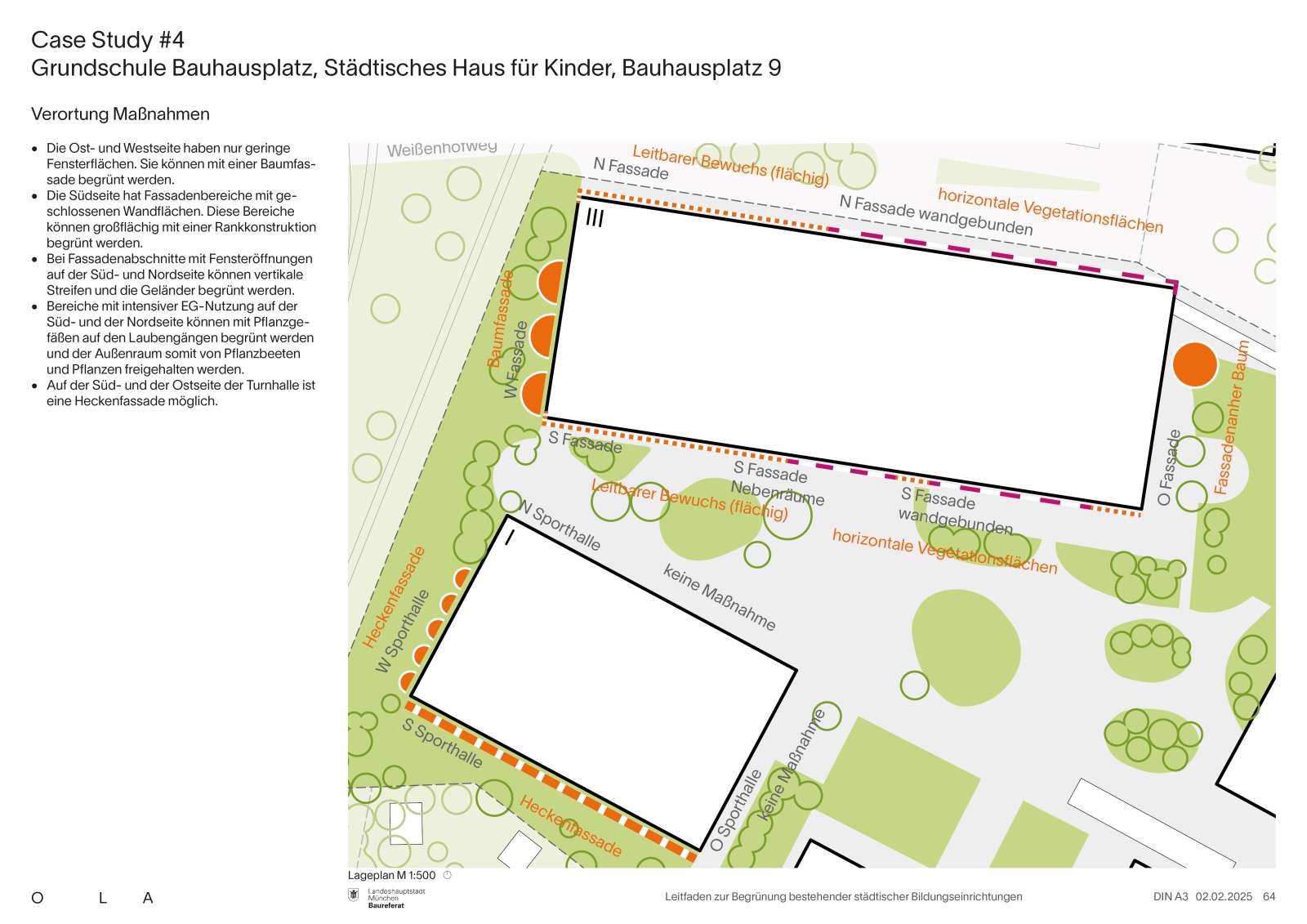
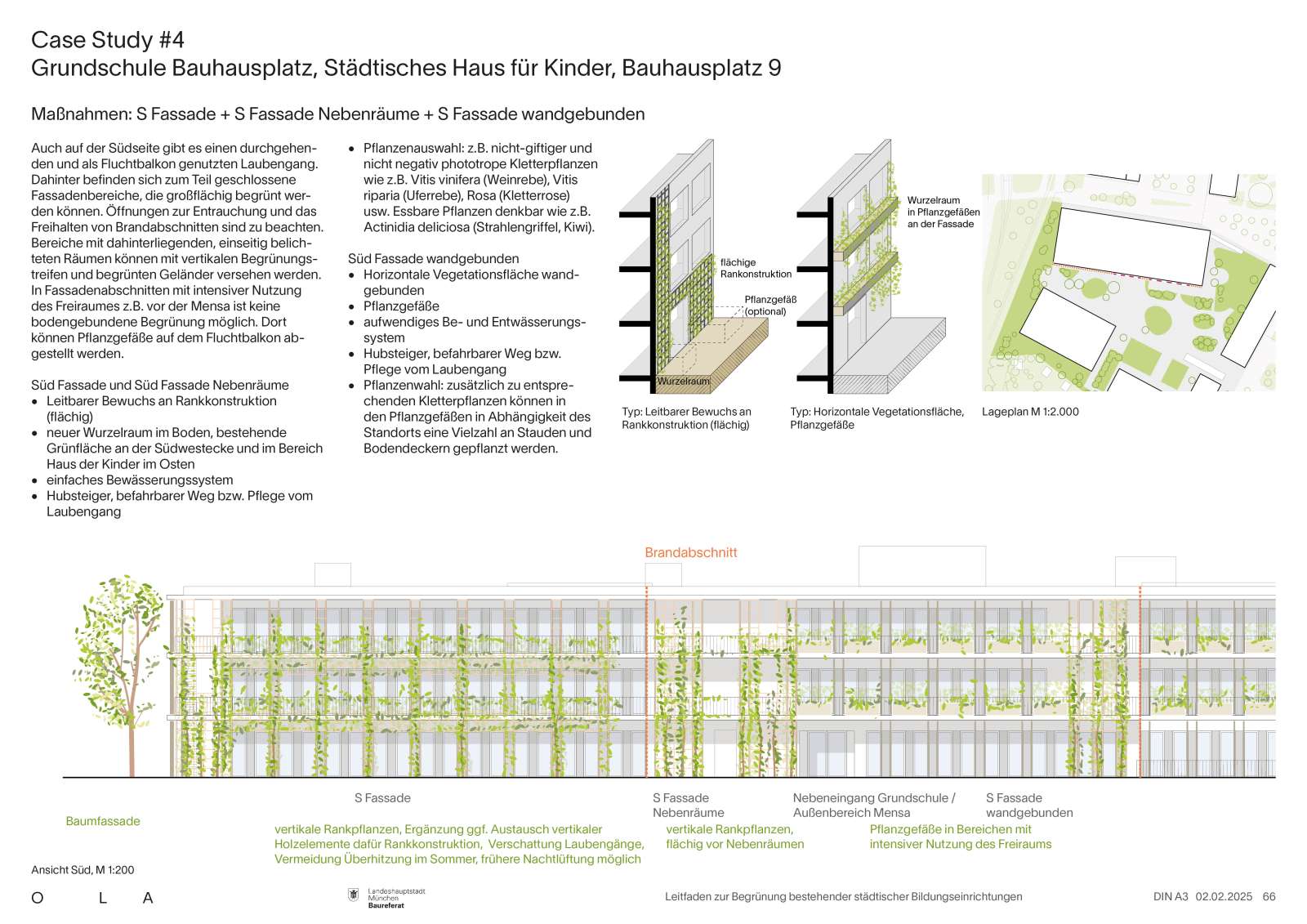
Against this backdrop, as part of its »Policy Resolution on a Climate-Neutral City Administration by 2030« and its goal of achieving climate neutrality by 2050, the City of Munich has committed to greening not only the roofs but also at least 30% of the facades of new municipal buildings and renovation projects—provided this is technically feasible and does not conflict with historic preservation laws. The aim of the study is to examine the potential of green facades and green spaces adjacent to buildings, using six selected school buildings, sports facilities, and daycare centers as case studies. Based on these findings, a set of guidelines will be developed to demonstrate how the insights gained can be applied to the entire portfolio of urban educational institutions and similar building types. In total, this affects approximately 400 school and sports facilities as well as about 450 daycare centers, comprising over 1,000 buildings. Due to complex facade structures, a high proportion of different types of windows, and requirements under fire safety and historic preservation laws, detailed, site-specific assessments are necessary.
At the same time, a set of guidelines for new construction projects was developed based on nine different planned projects and their planning processes, and the projects were evaluated in an iterative process in collaboration with the planning teams.
Project
Guide to Green Facades
What
Guide
Where
Munich, GER
When
2025–26
Guide to Green Facades
What
Guide
Where
Munich, GER
When
2025–26
Development of two guidelines on greening existing and new educational facilities for the City of Munich’s Department of Building and Construction