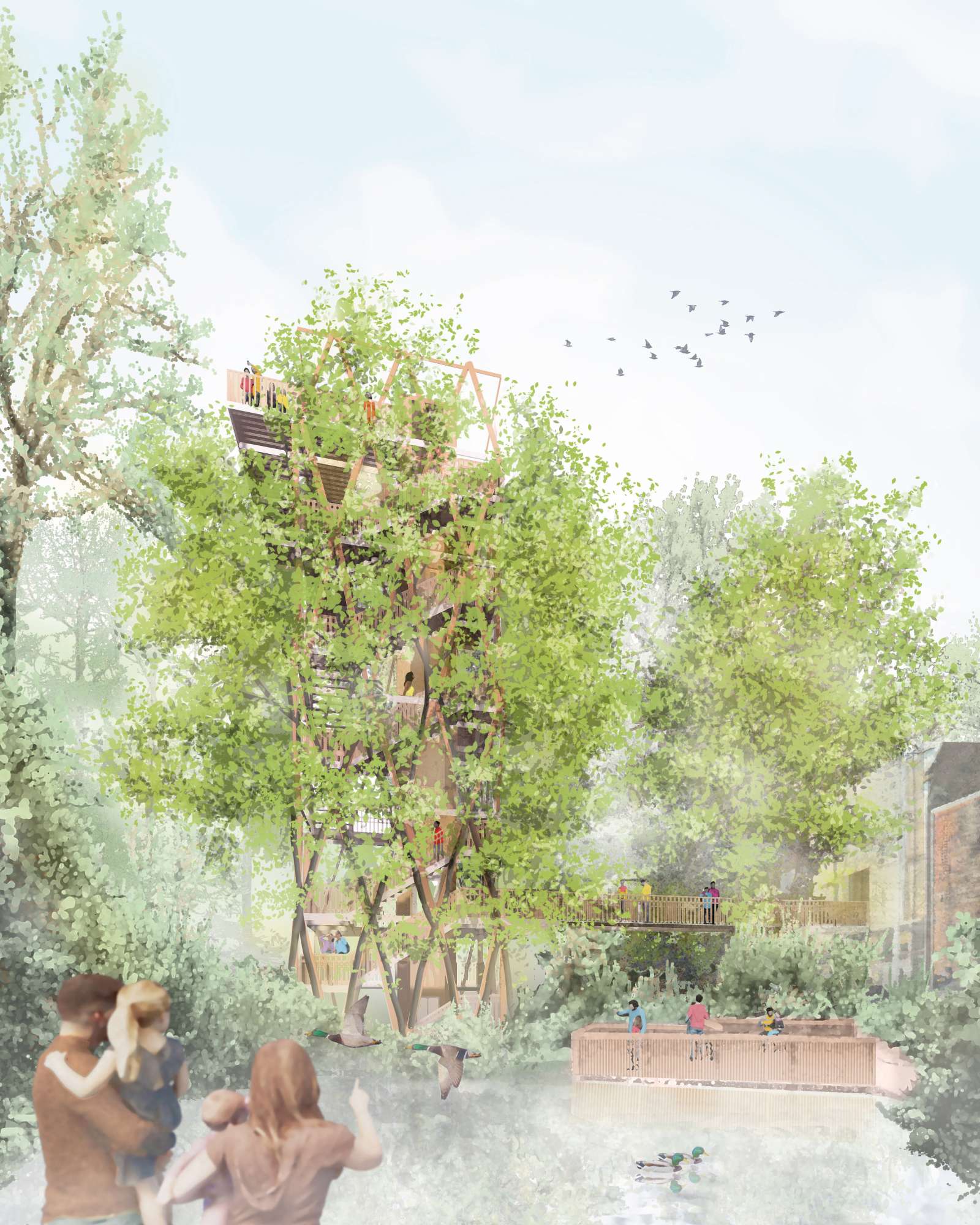
The Education Tree is conceived as a structure in the making. It is integrated into the forest’s temporal processes and connects ecological dynamics, forest management, and architectural transformation. Growing, harvesting, reusing, and returning materials to natural cycles are not merely conveyed thematically, but are made tangible through spatial and structural design.
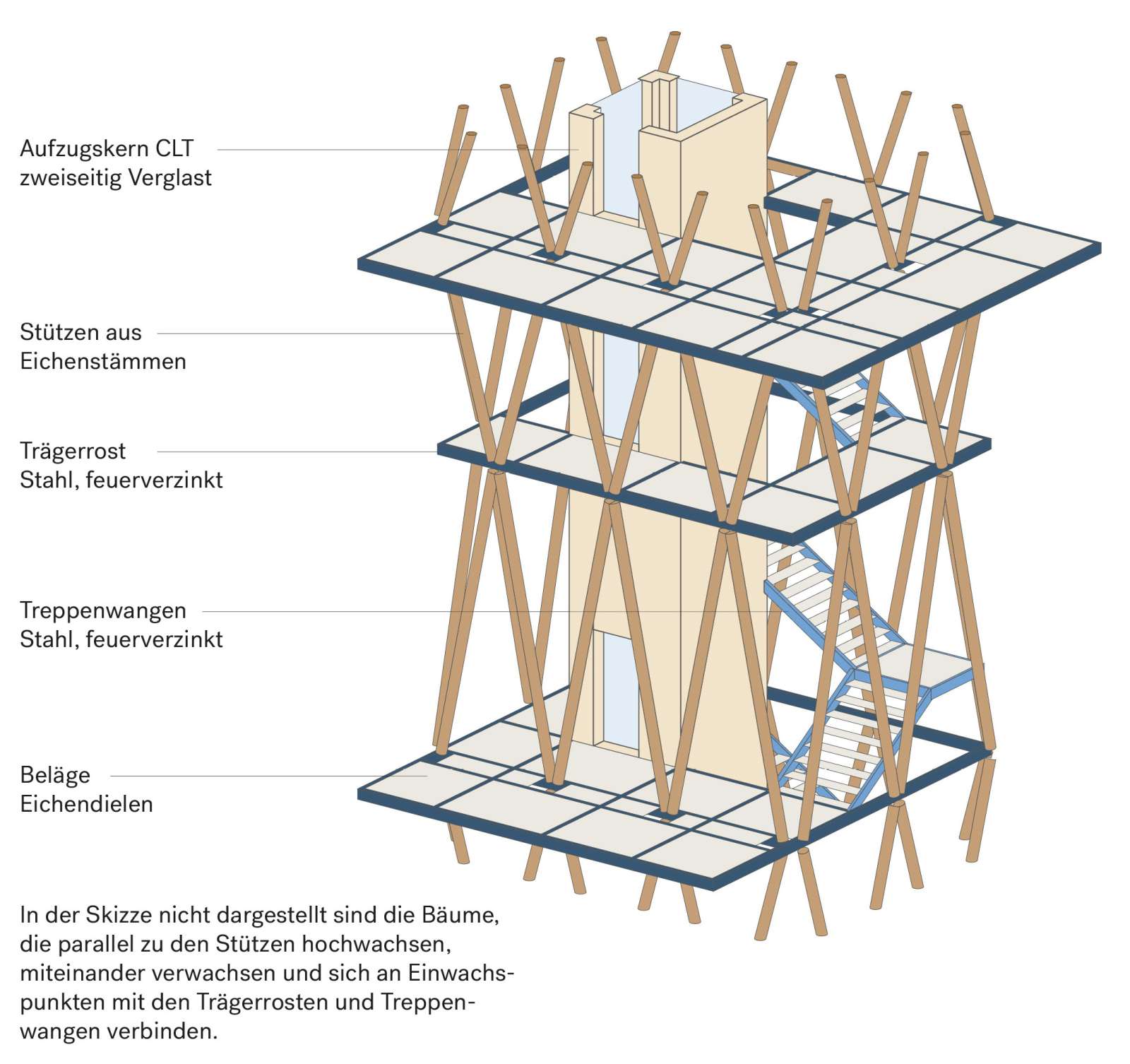
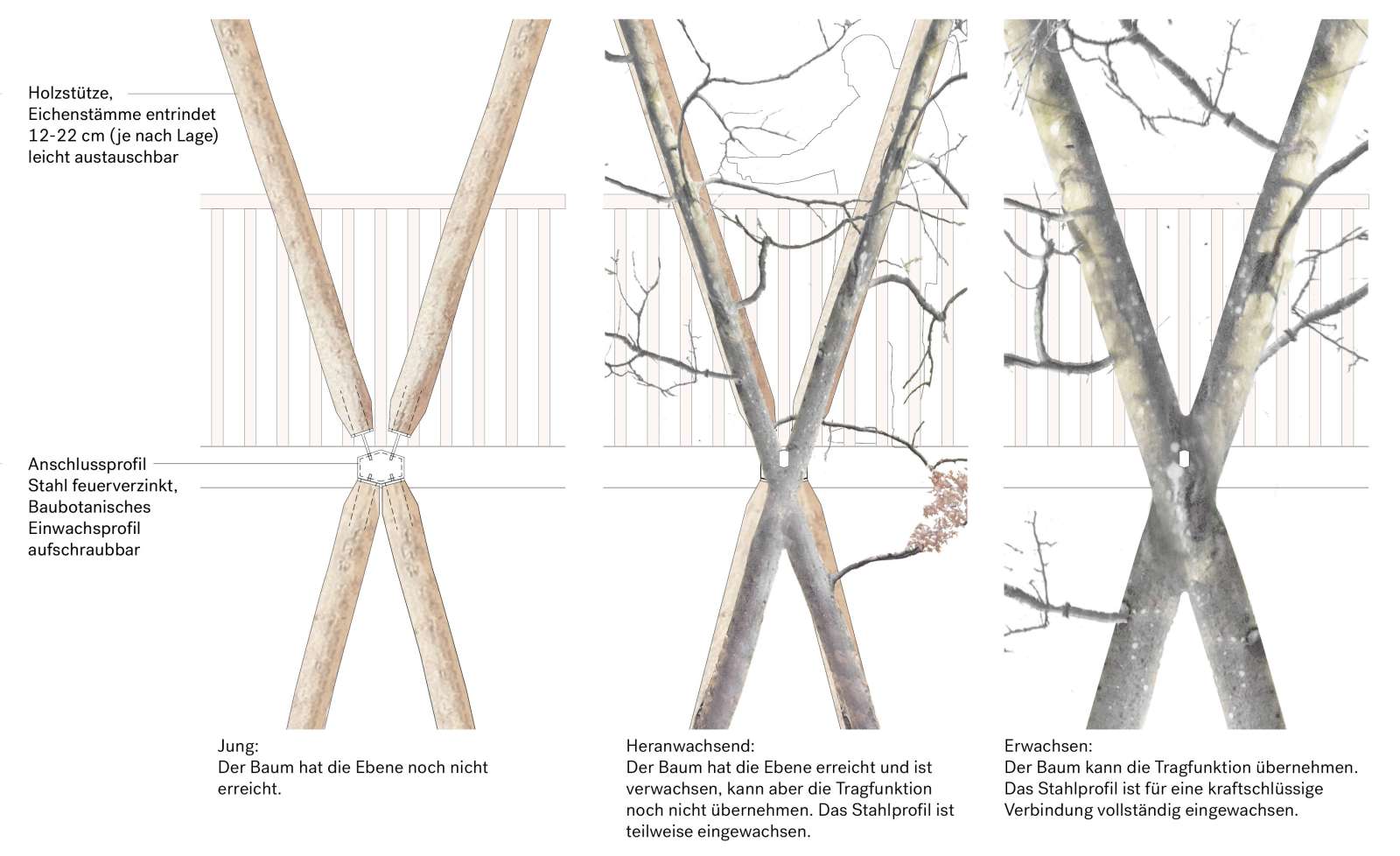
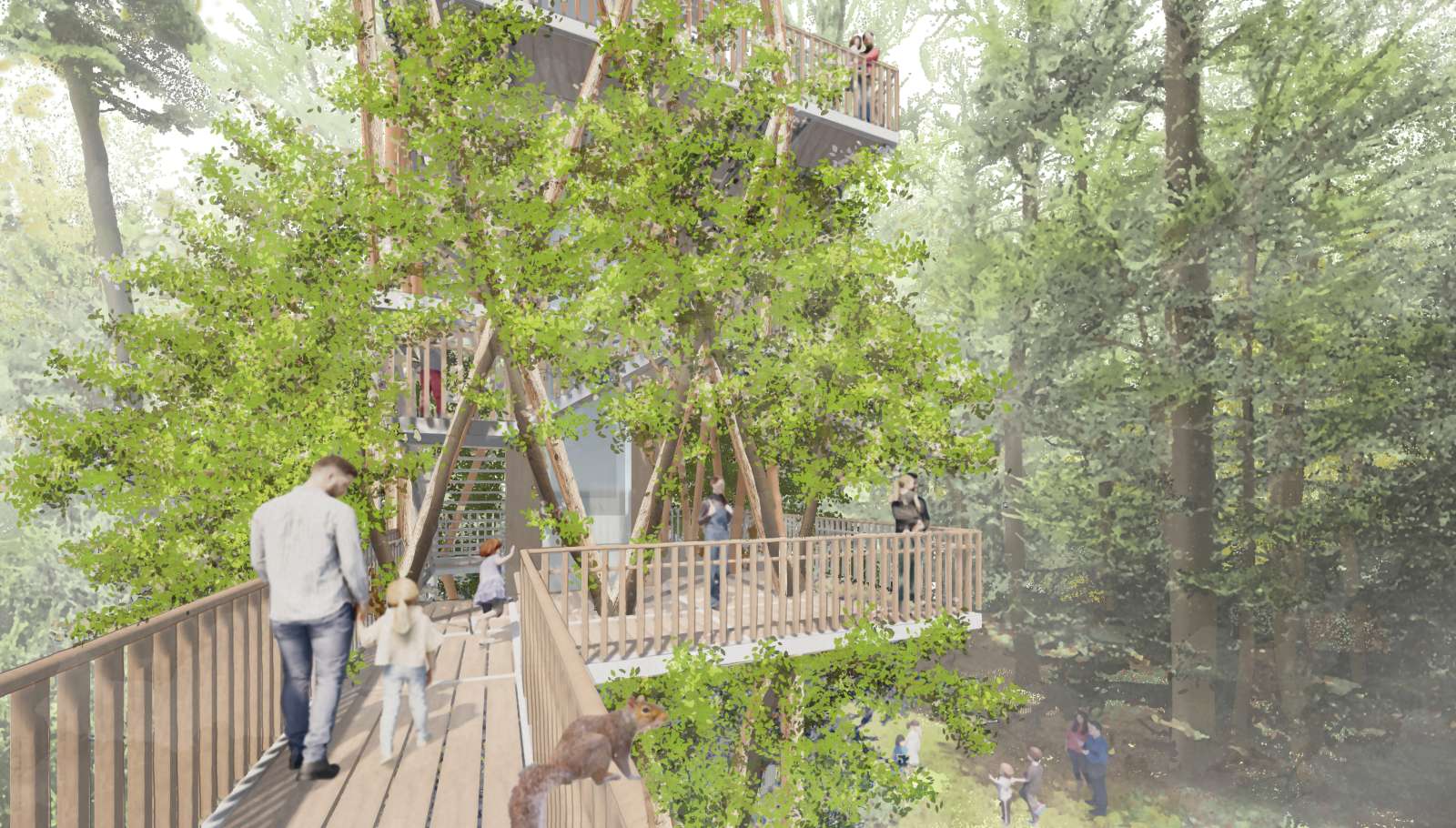
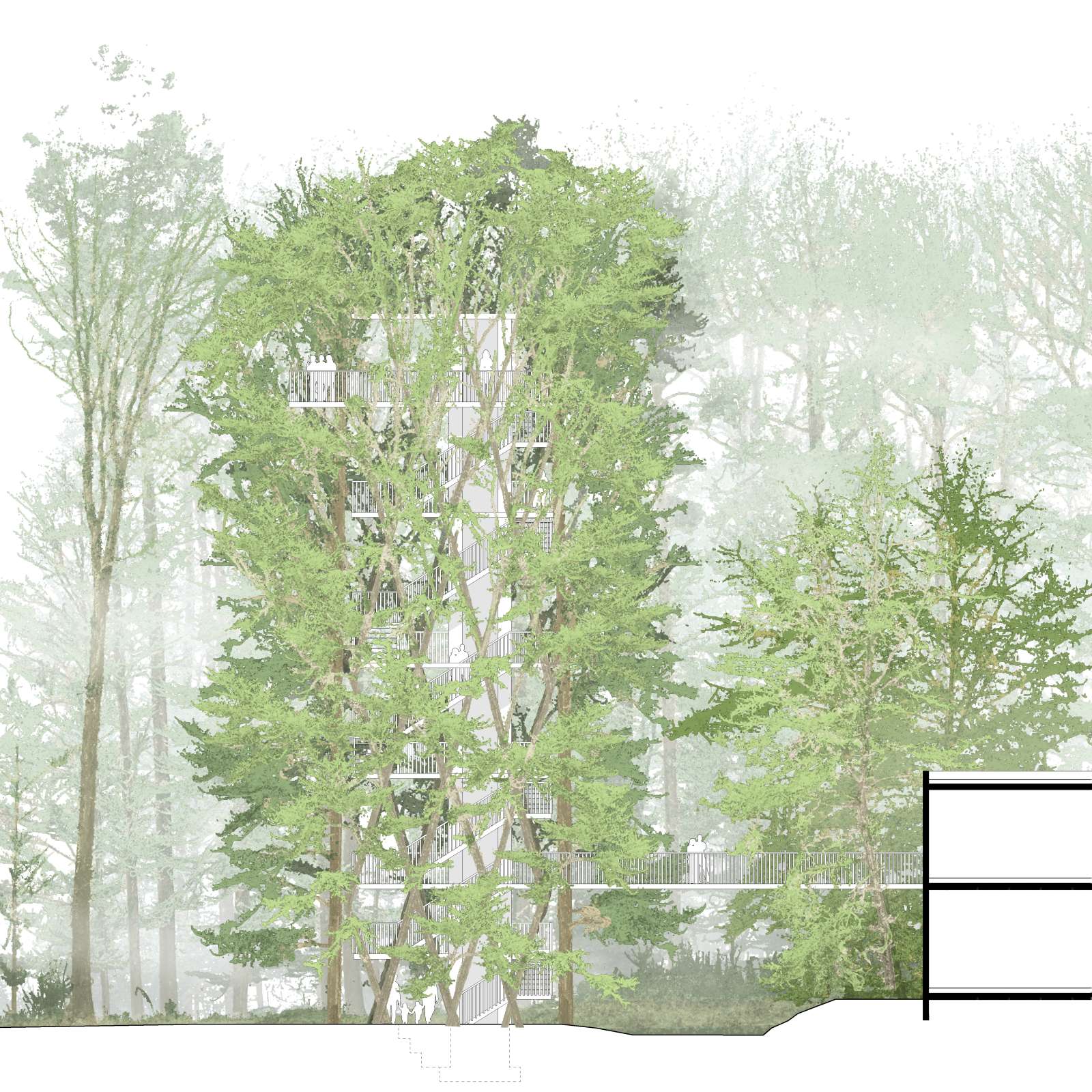
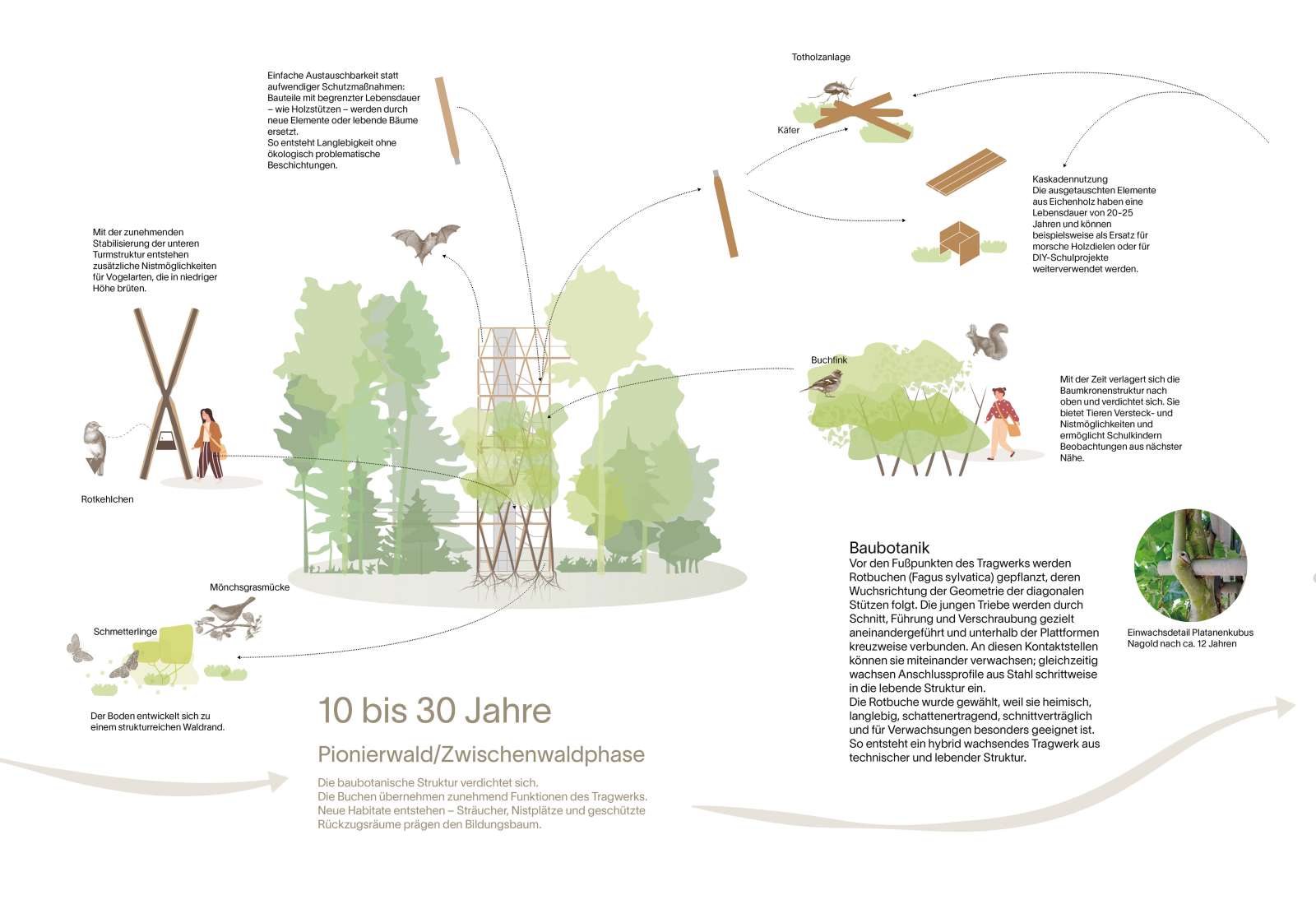
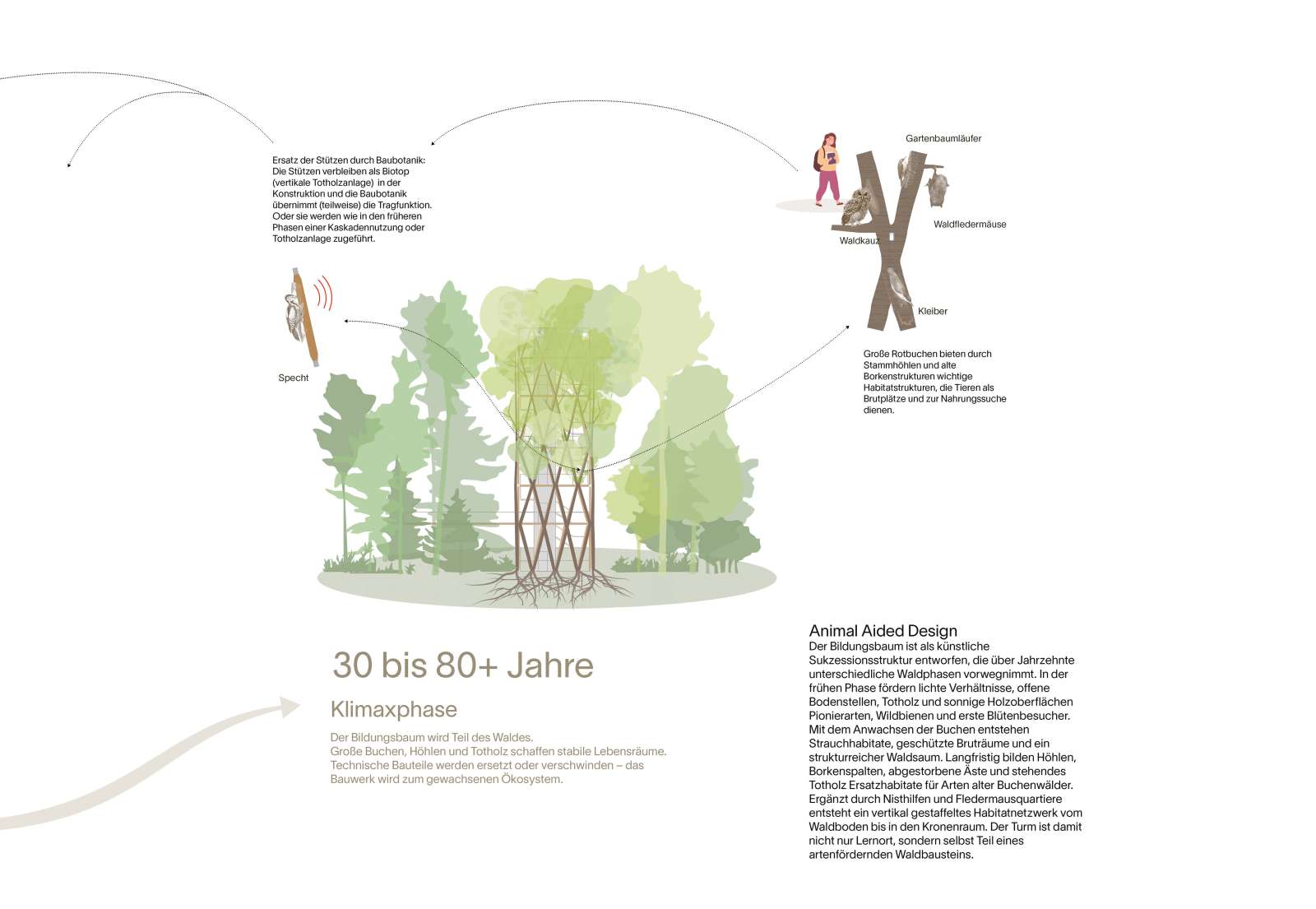
The Baubotanik approach forms the conceptual core of the project. European beech trees are planted at the base of the round-timber structure, with their growth direction following the geometry of the construction. Through pruning and training, the shoots are guided upward along the structure and connected to one another below the platforms. In this way, they grow together, and the steel elements cantilevering out from the junctions gradually integrate into the living structure. In this way, a living extension of the structural framework develops over the years, making growth visible and potentially contributing to the structure’s functionality in the long term. The outer diagonal wooden supports are deliberately designed not as permanently protected structural elements, but as replaceable components exposed to the elements that accompany a living structural framework. They can be replaced individually with new supports or, in the long term—once the structural framework has achieved the necessary load-bearing capacity—replaced by living wood. The forest’s passage of time is thus not merely recounted, but inscribed into the structure itself. For visitors, the educational tree becomes a vivid lesson in growth, maintenance, time, and material cycles.
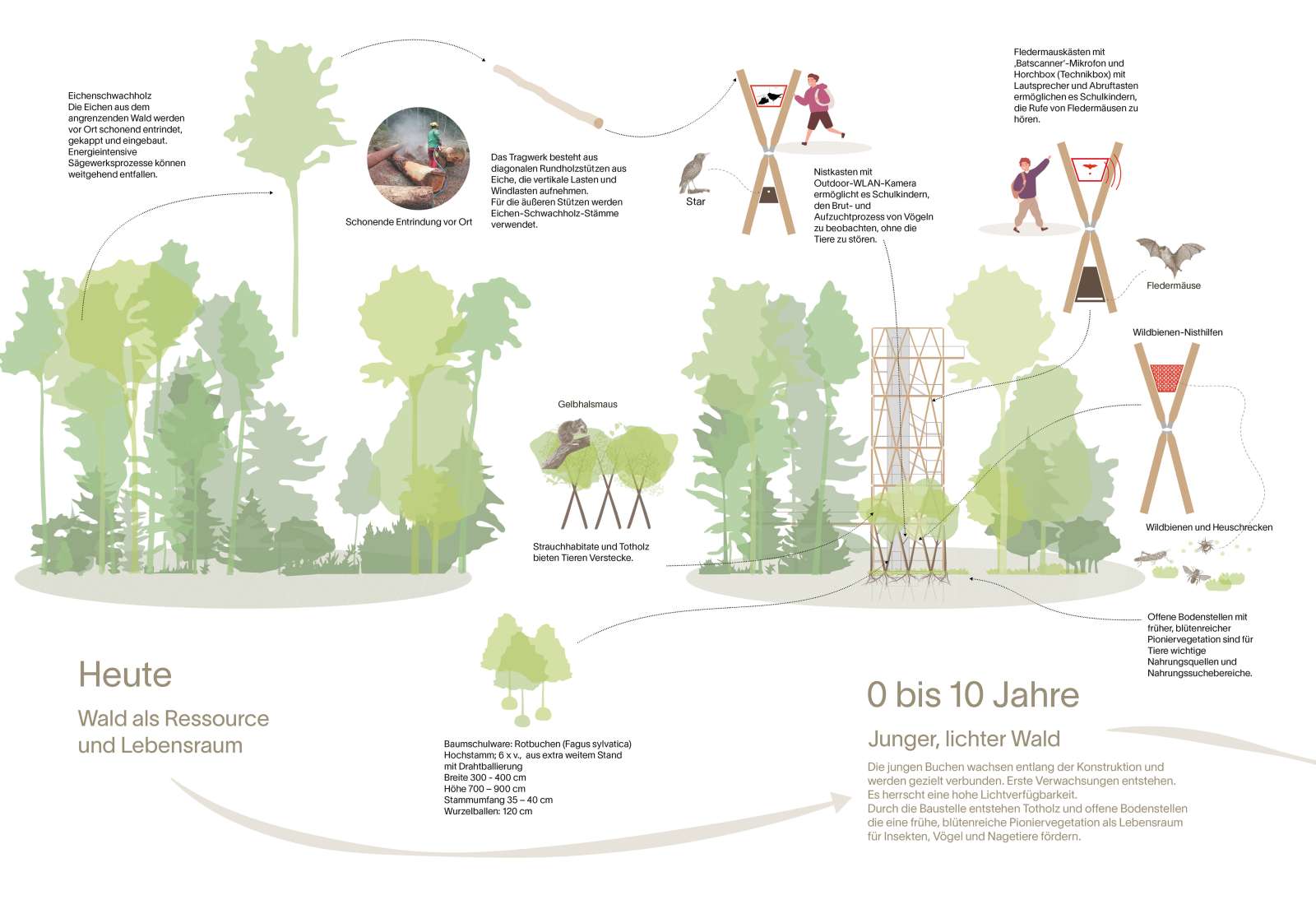
Biodiversity has been incorporated as a standalone design principle from the very beginning. In the early phase, the open conditions created by the construction work, along with deadwood and patches of bare ground, encourage the growth of initial pioneer vegetation and provide food and niches for insects and early colonizers. In the intermediate phase, the young beech stand becomes denser, forming shrub habitats, sheltered refuges, and new nesting sites. In the later climax phase, the large beech trees, hollow trunks, bark structures, and the deadwood left in place create permanent habitats for birds, bats, and other forest organisms. The design thus describes biodiversity as a process of temporal succession that evolves alongside the structure and can be observed by school classes over the course of several years.
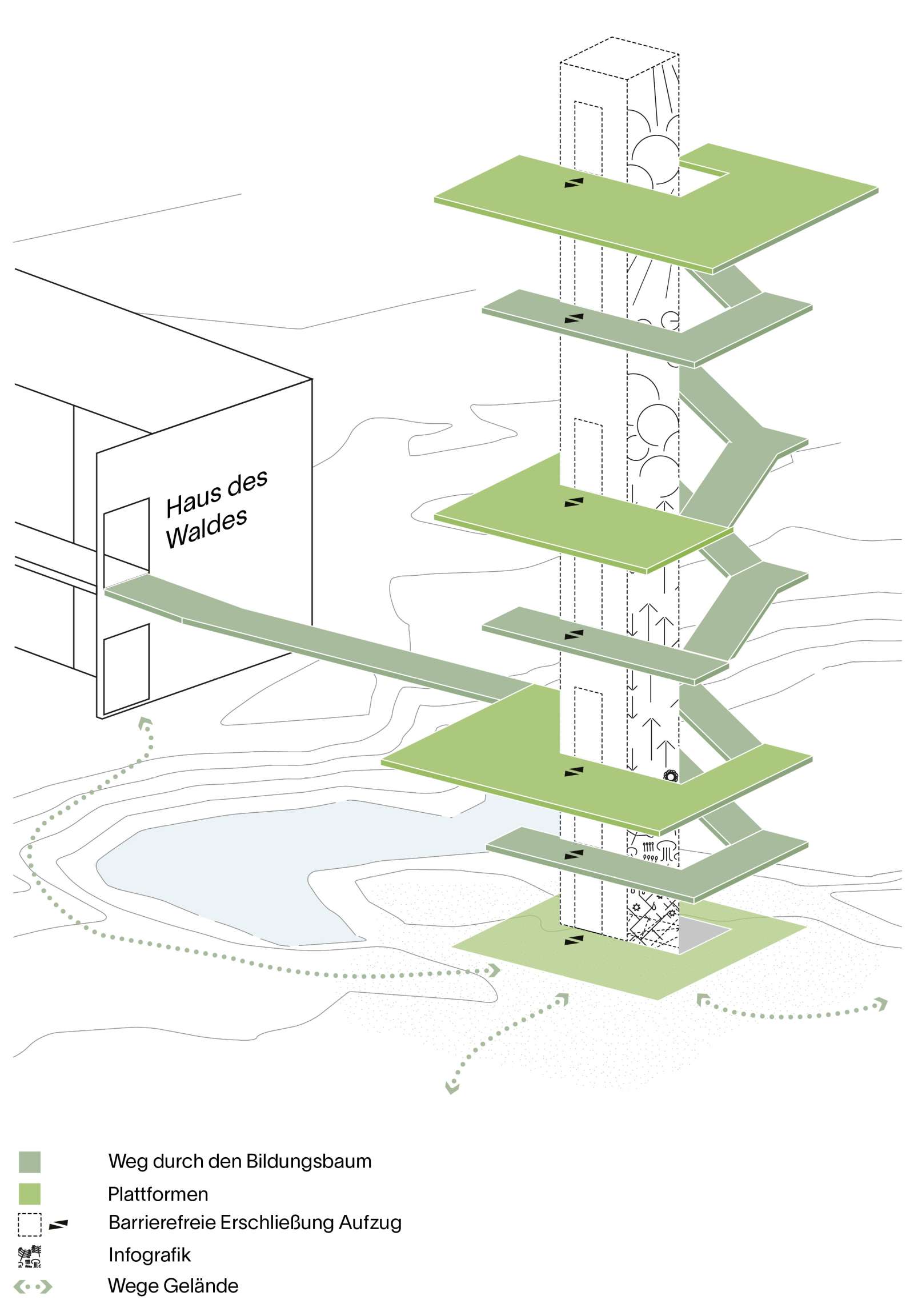
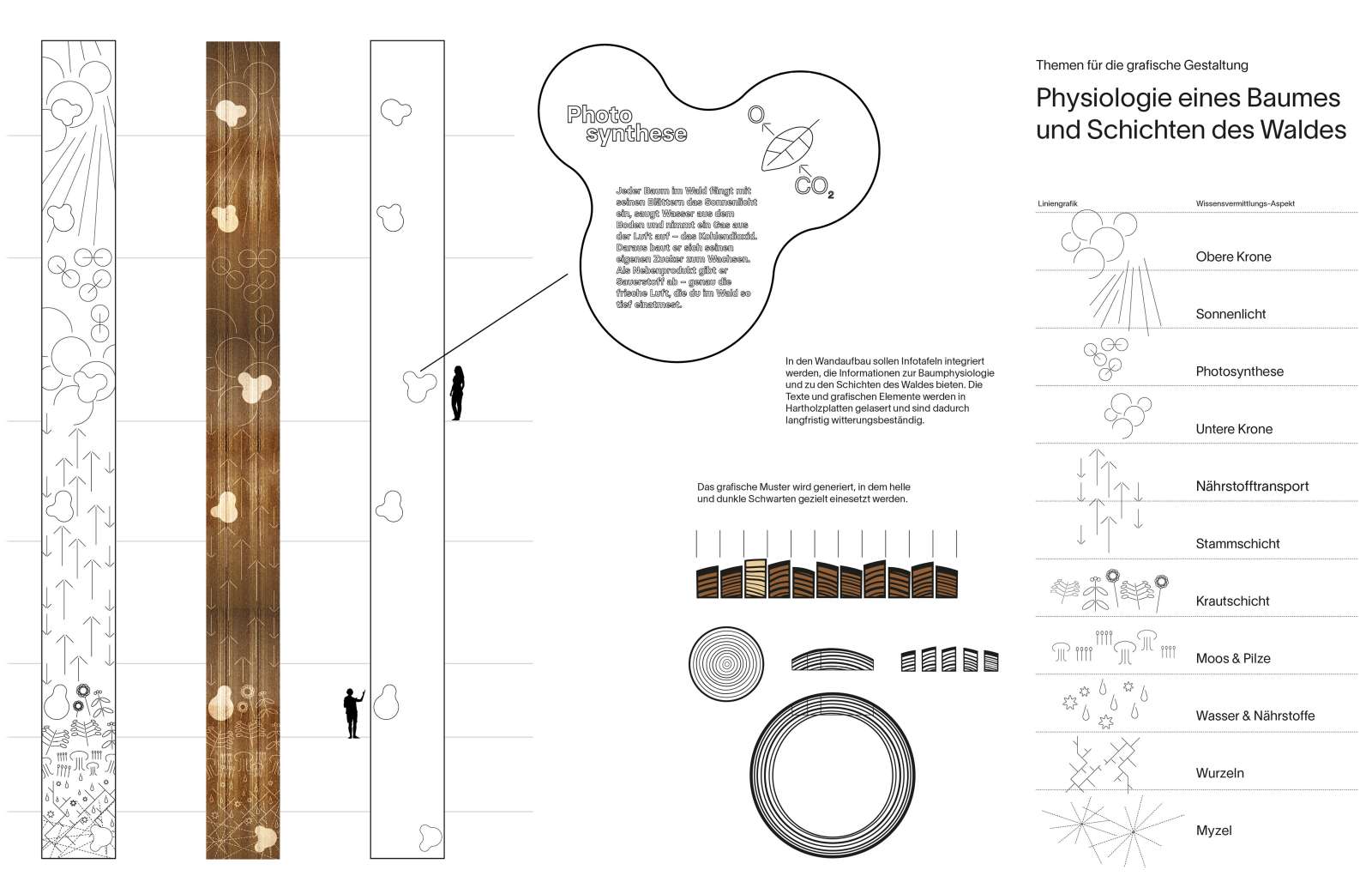
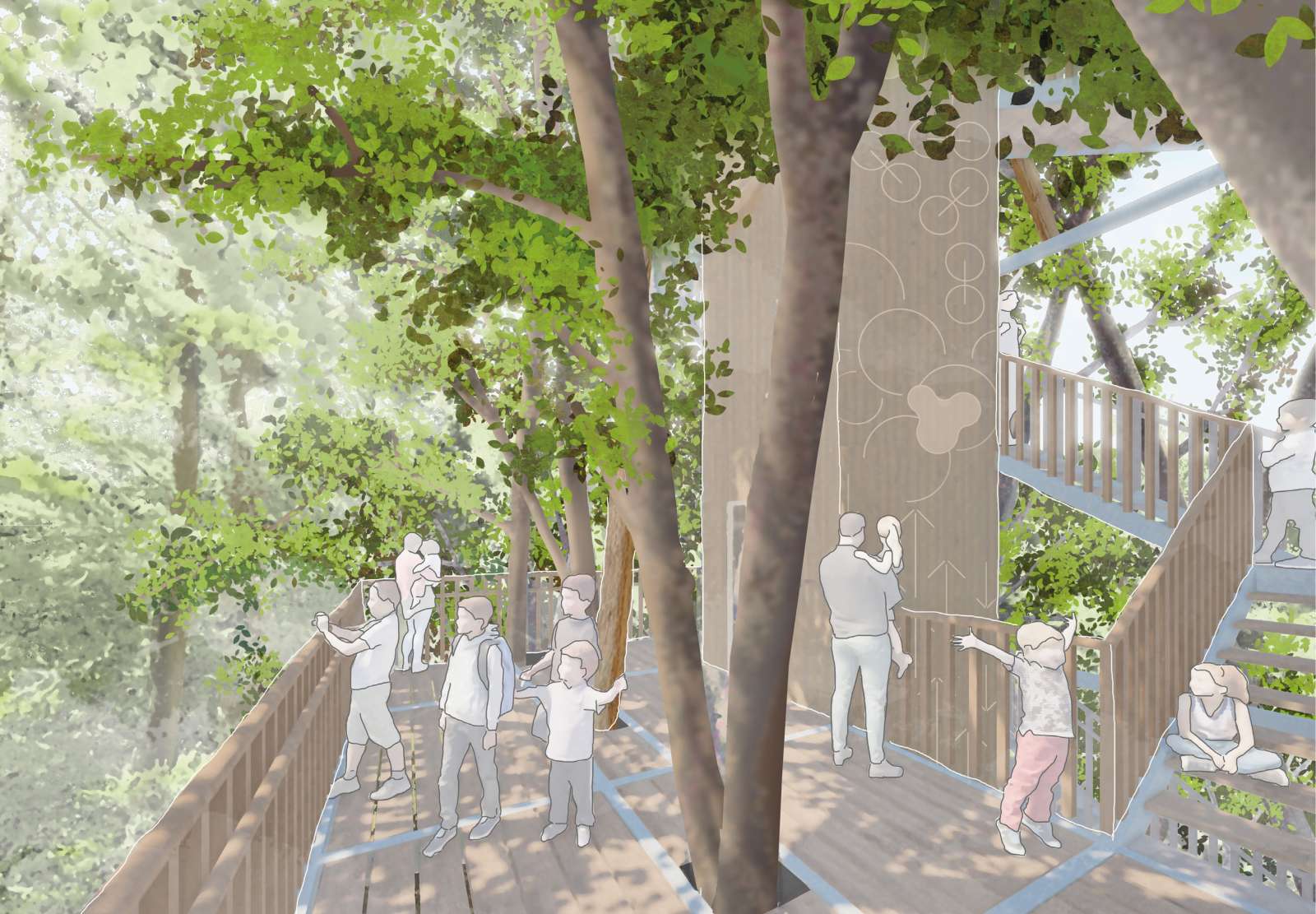
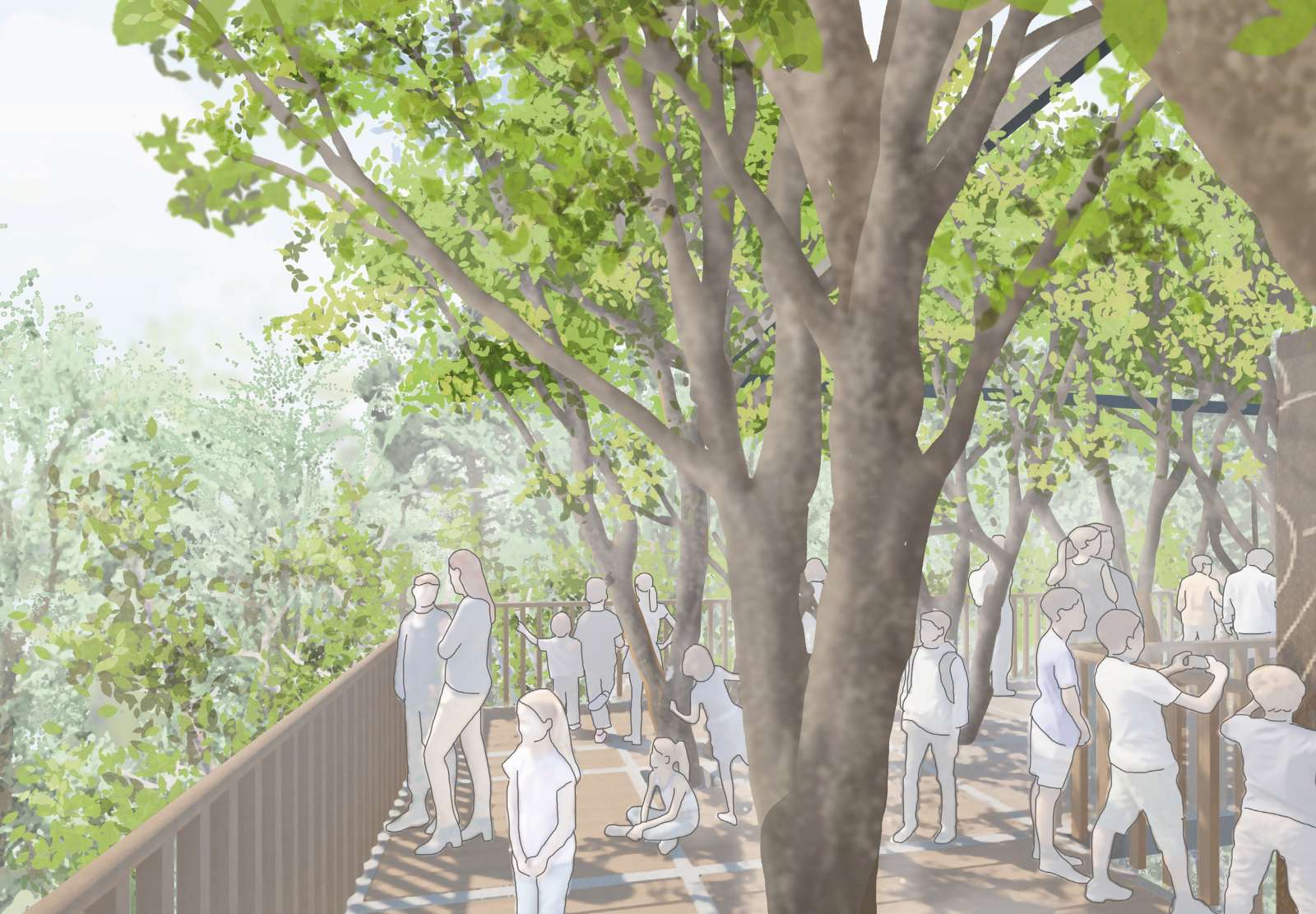
Several open-concept platforms extend from the ground level through the shrub and trunk zones up to the open canopy, accommodating groups of 30 to 50 people. A continuous graphic display along the elevator shaft explains the tree’s physiological processes as well as the climatic and ecological differences at each elevation. Learning is thus integrated into the spatial experience of the structure: Visitors move not only through different levels, but also through the various layers and habitats of the forest.
Overall, the design creates an architectural framework in which the forest itself becomes an active participant. The educational tree, a product of Baubotanik, serves simultaneously as a lookout point, a learning space, a habitat framework, and a living process. Its architectural merit lies in the fact that architectural botany and biodiversity shape the project from the very beginning—spatially, didactically, and temporally. In this way, the Education Tree becomes a structure conceived from the logic of the forest, translating the guiding principle of the House of the Forest into a built form.
Project
Education Tree, Expansion Haus des Waldes
What
Competion, Recognition
Where
Stuttgart, GER
When
2026
Education Tree, Expansion Haus des Waldes
What
Competion, Recognition
Where
Stuttgart, GER
When
2026
In cooperation with
Studio Animal-Aided Design
Jan Knippers Ingenieure
Niessner Design
TOP Brandschutz Ingenieure
Sketch of the balcony with mature trees (level 12.60m): Some of the trees have taken over the load-bearing function, and supports have been removed.
Sketch of the top level with mature trees (level 21.70 m): A view of the treetops of the surrounding forest from the top platform.
Southeast view with young trees
Northeast view with young trees
Northwest view with maturing trees
Southwest view with maturing trees
Northeast view with matured trees
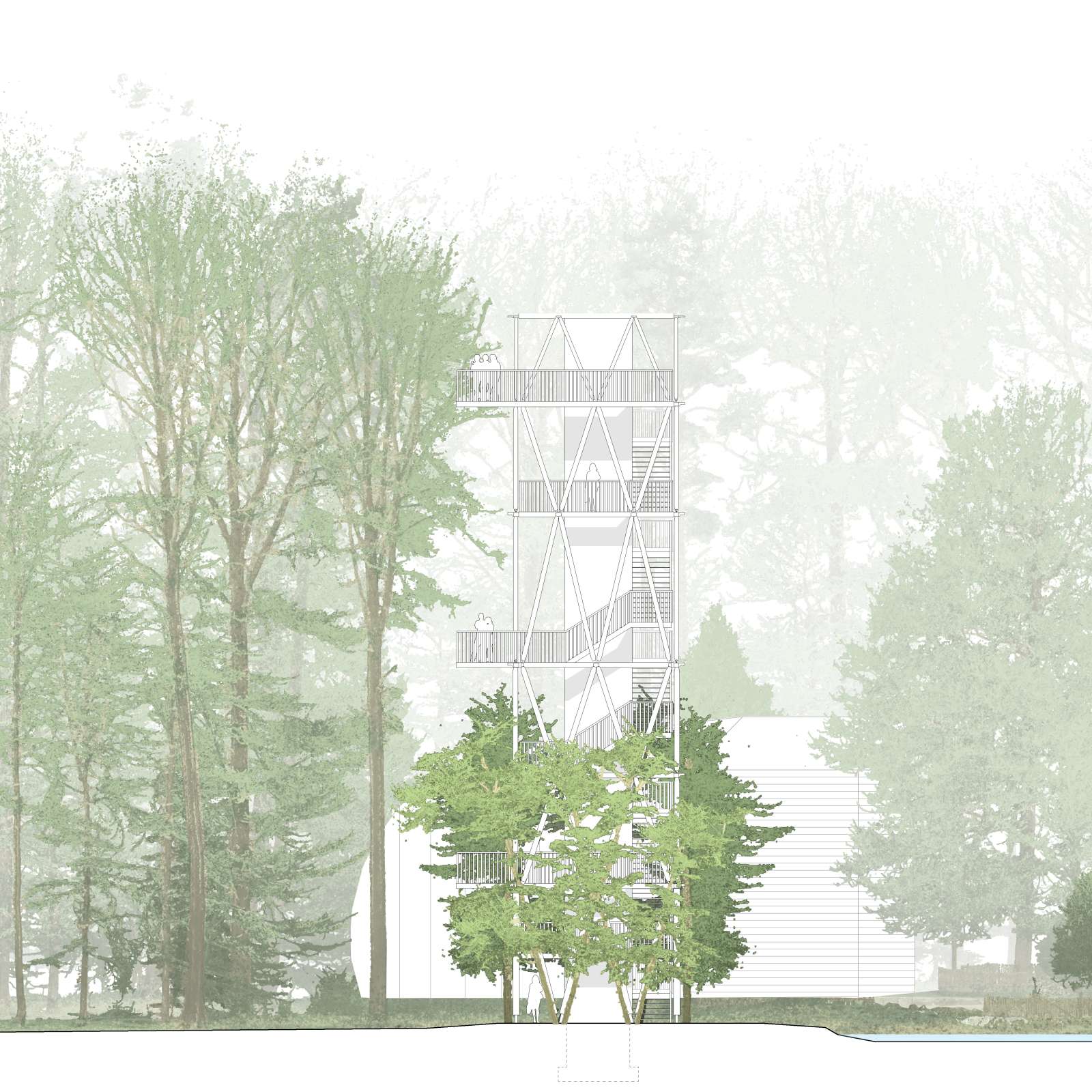
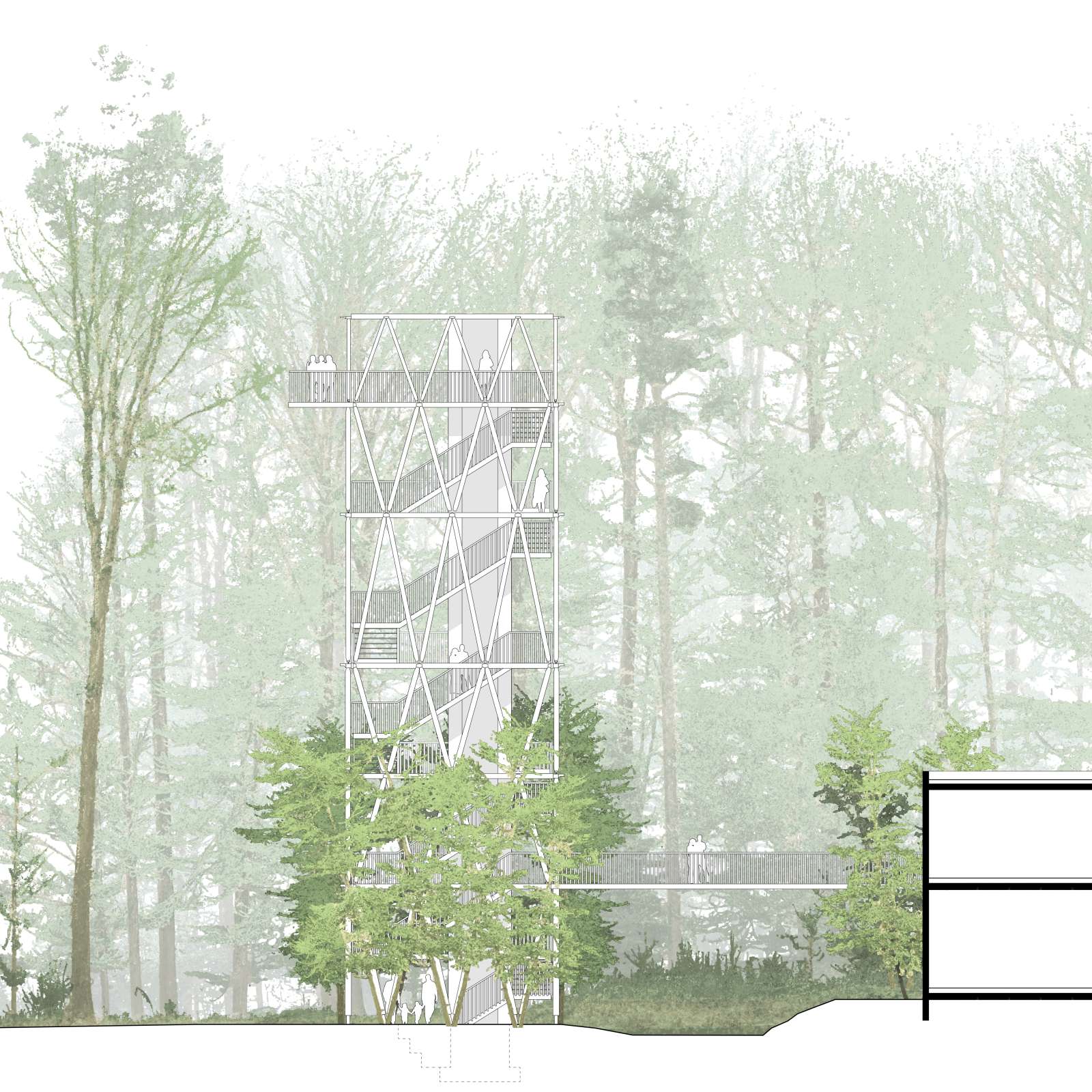
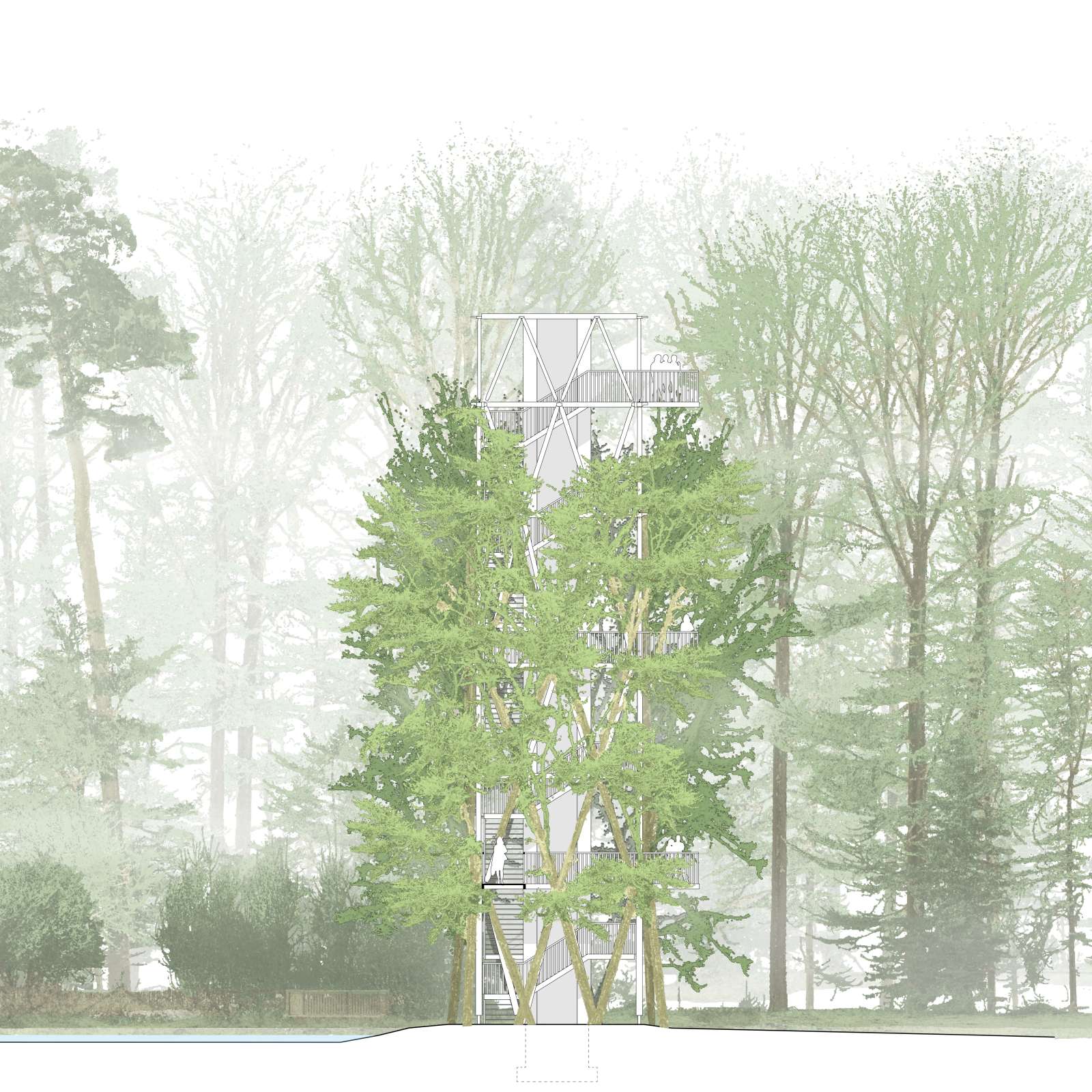
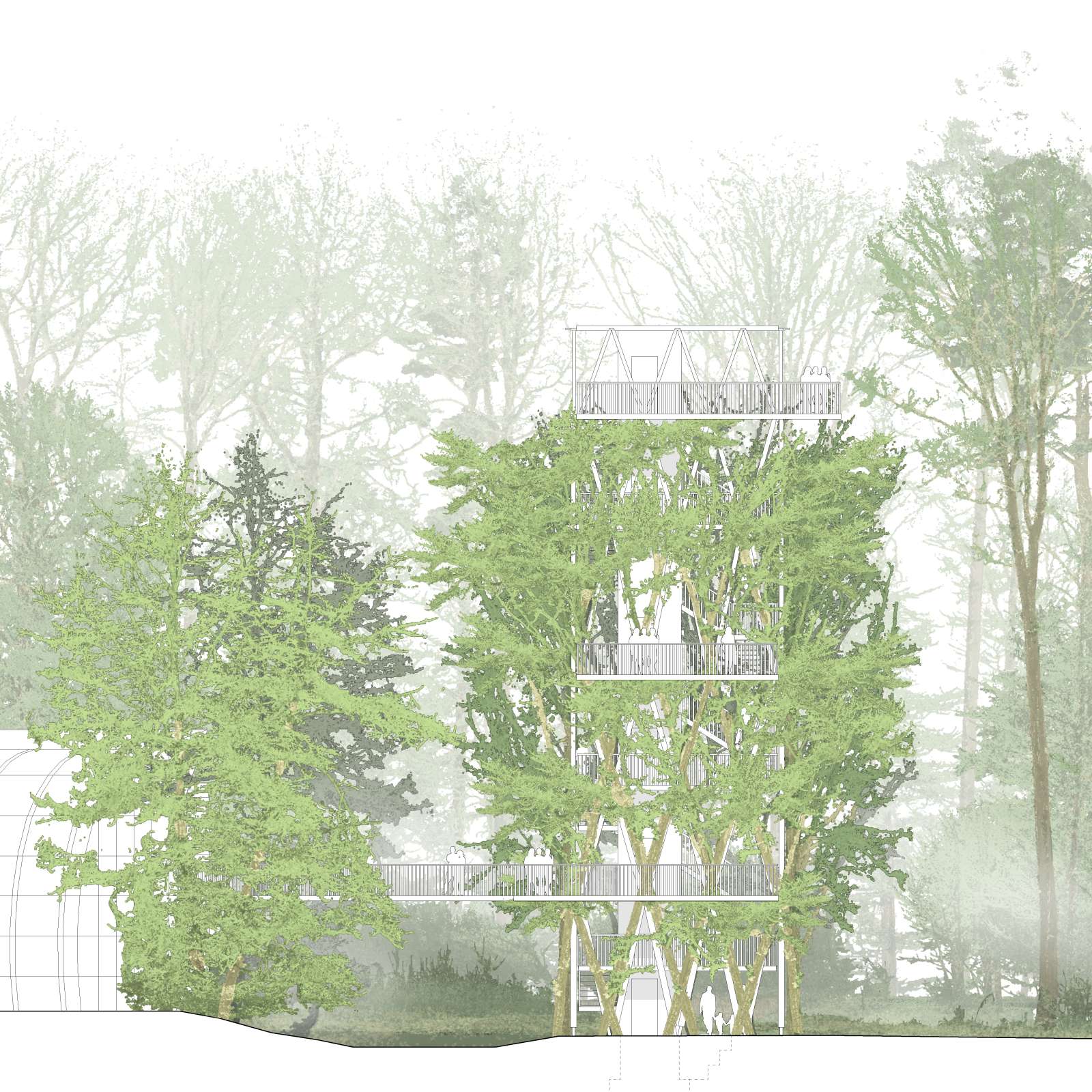
Section of the elevator shaft with young trees
Section Tree-Diagram
Section of the elevator shaft with matured trees
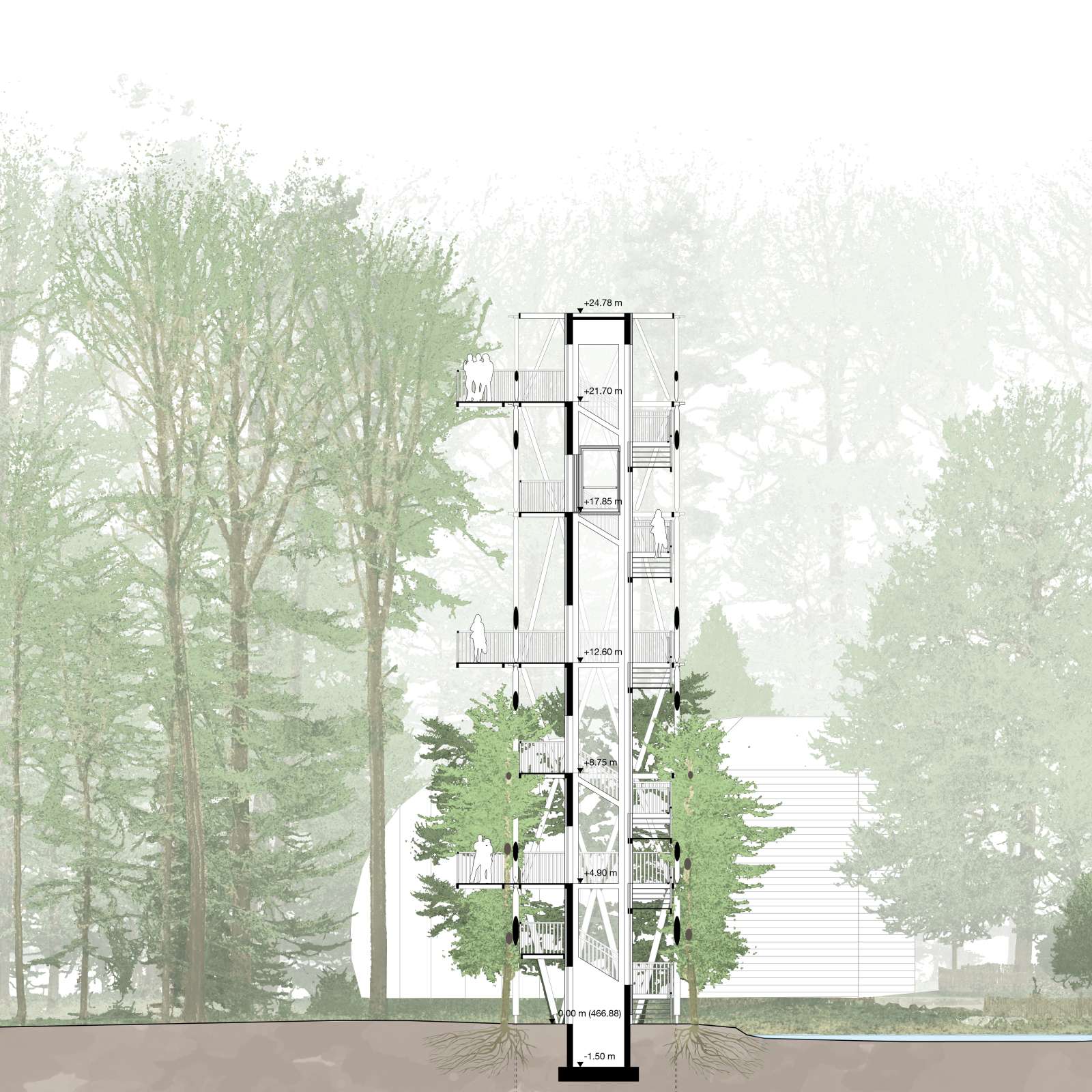
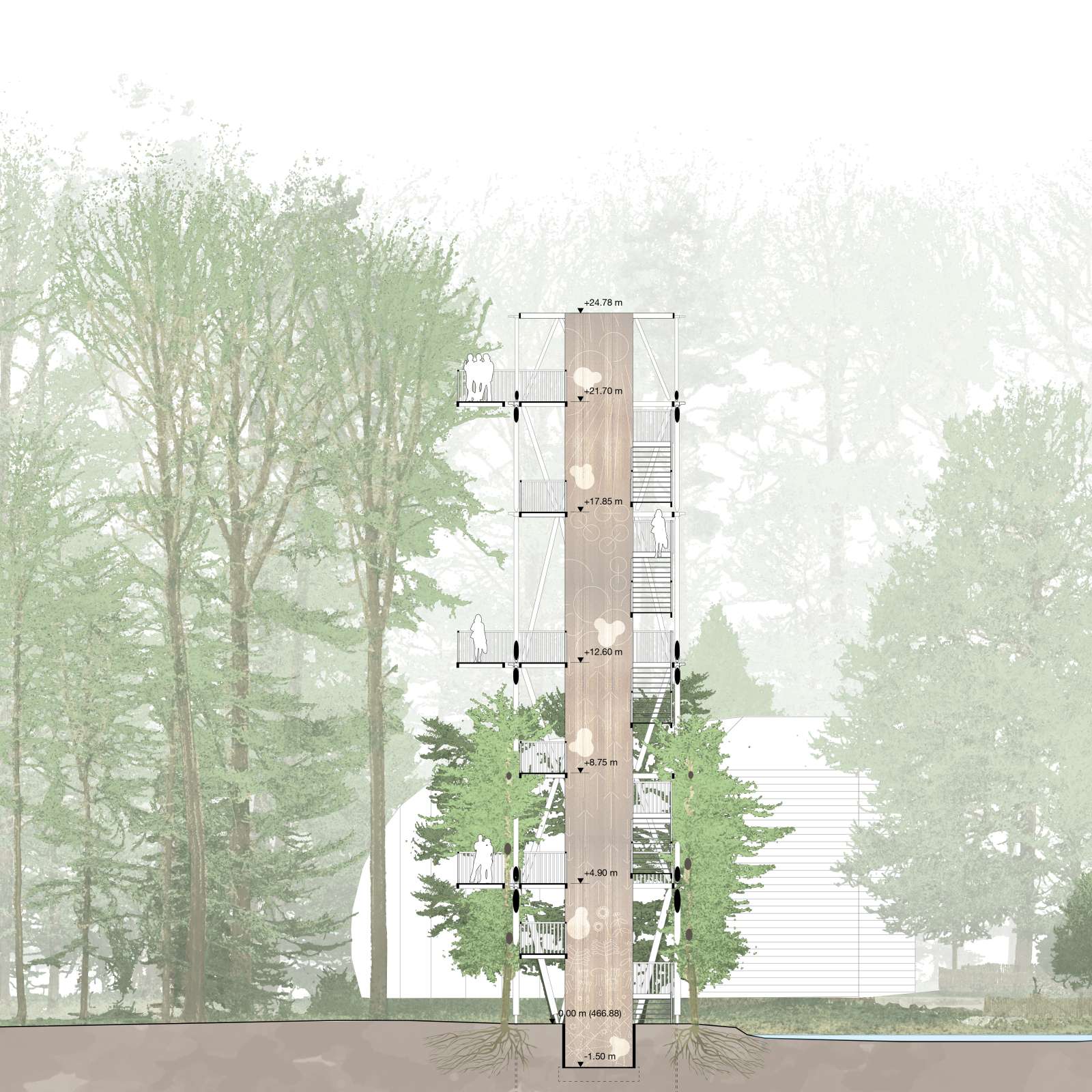
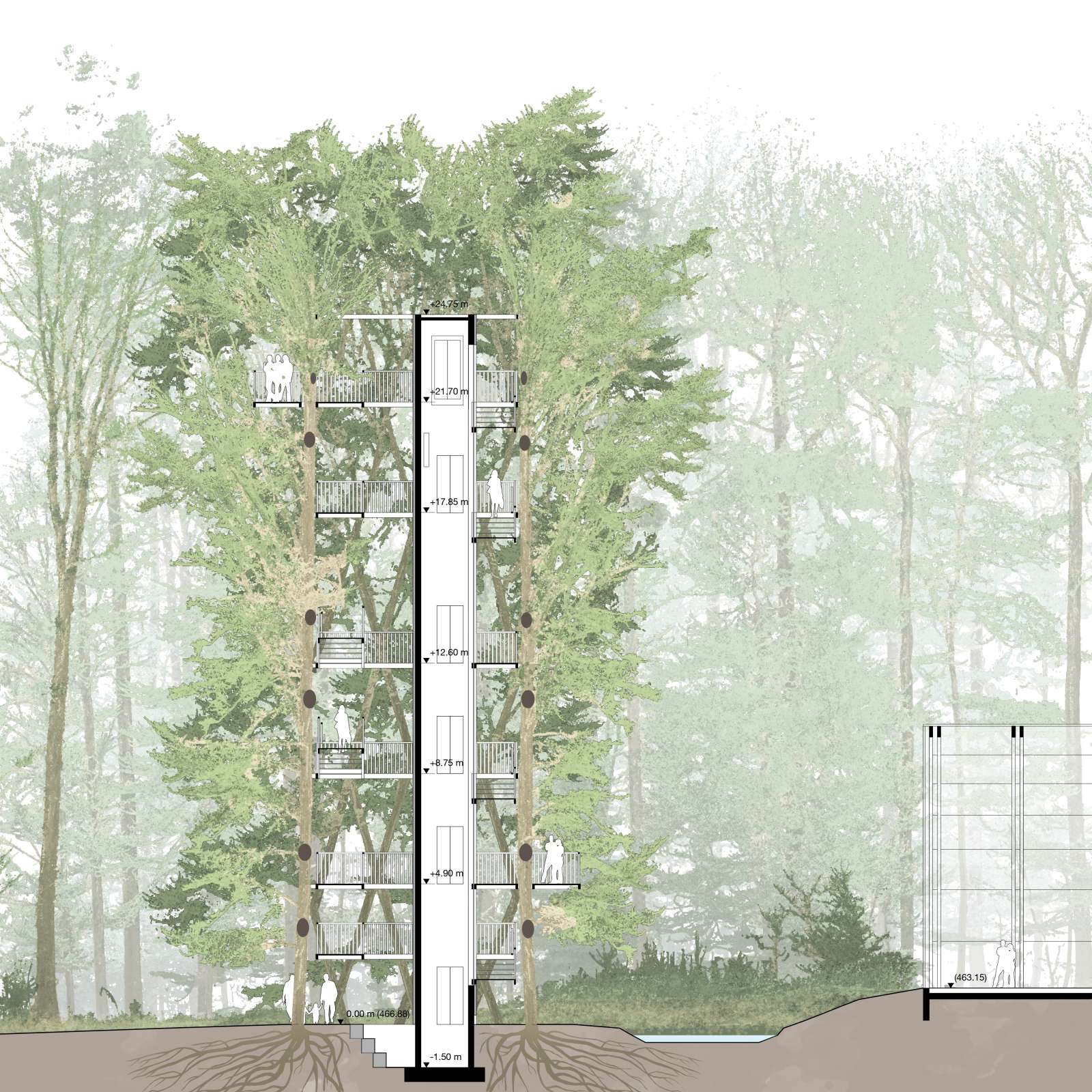
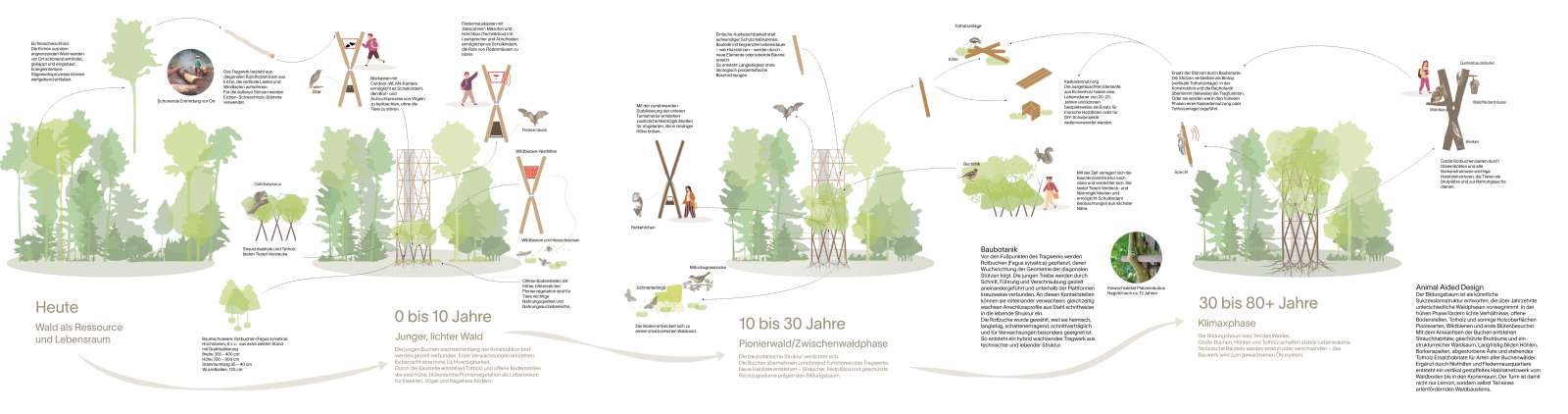
0–10 years: Young, sparse forest
10–30 years: Pioneer forest / Transition forest phase
30–80 years: Prime
Roof
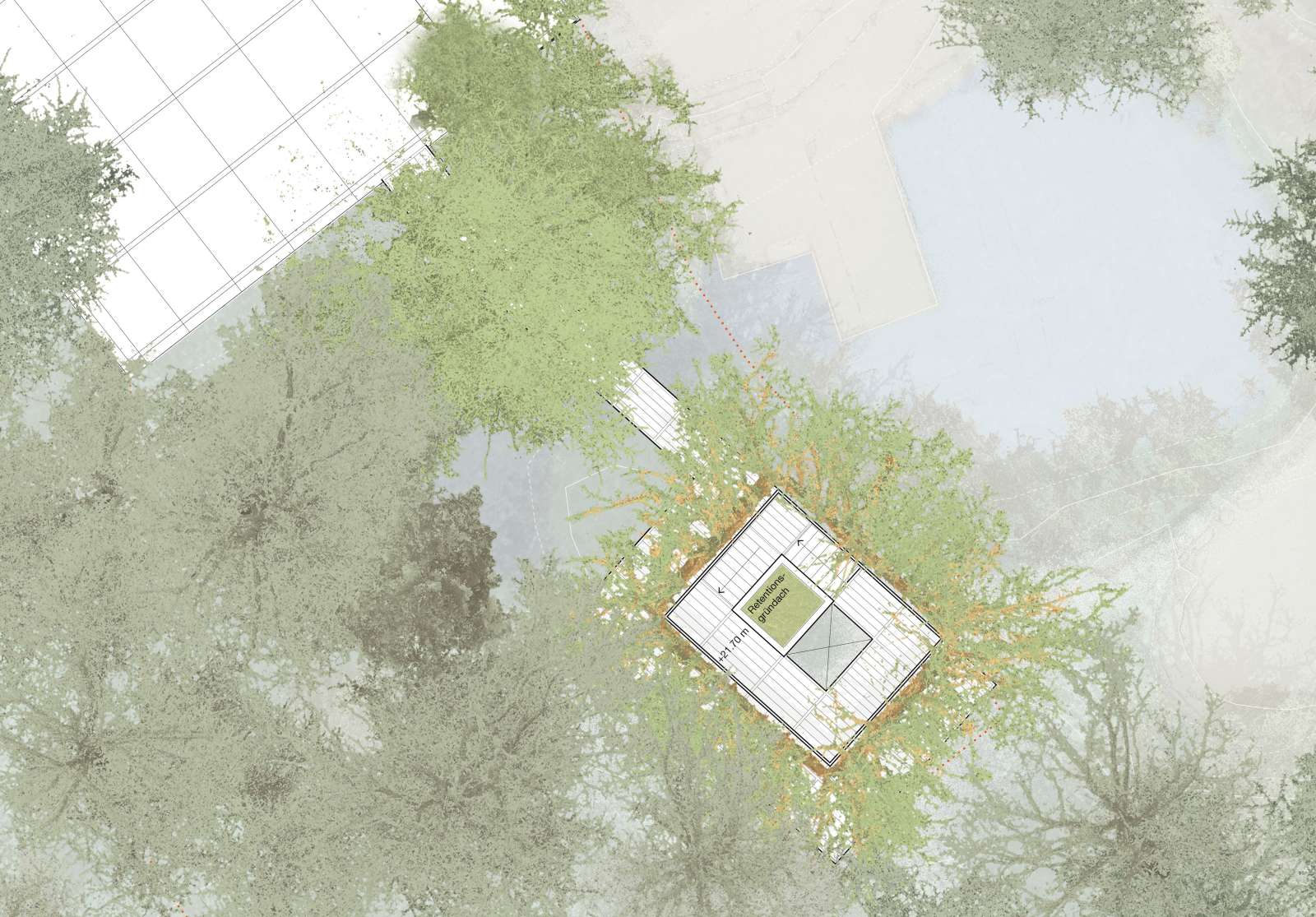
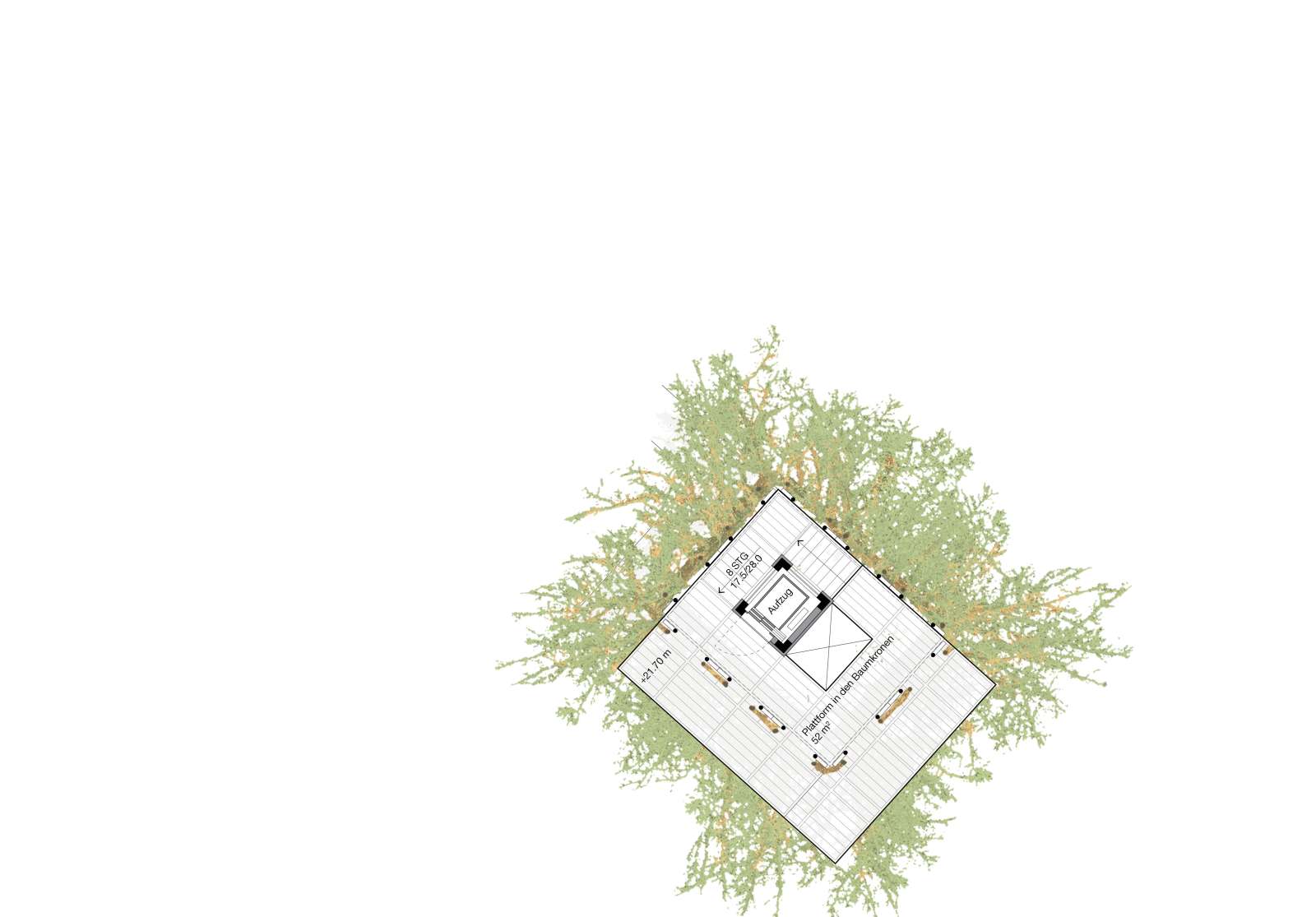
Floor plan 21,70m
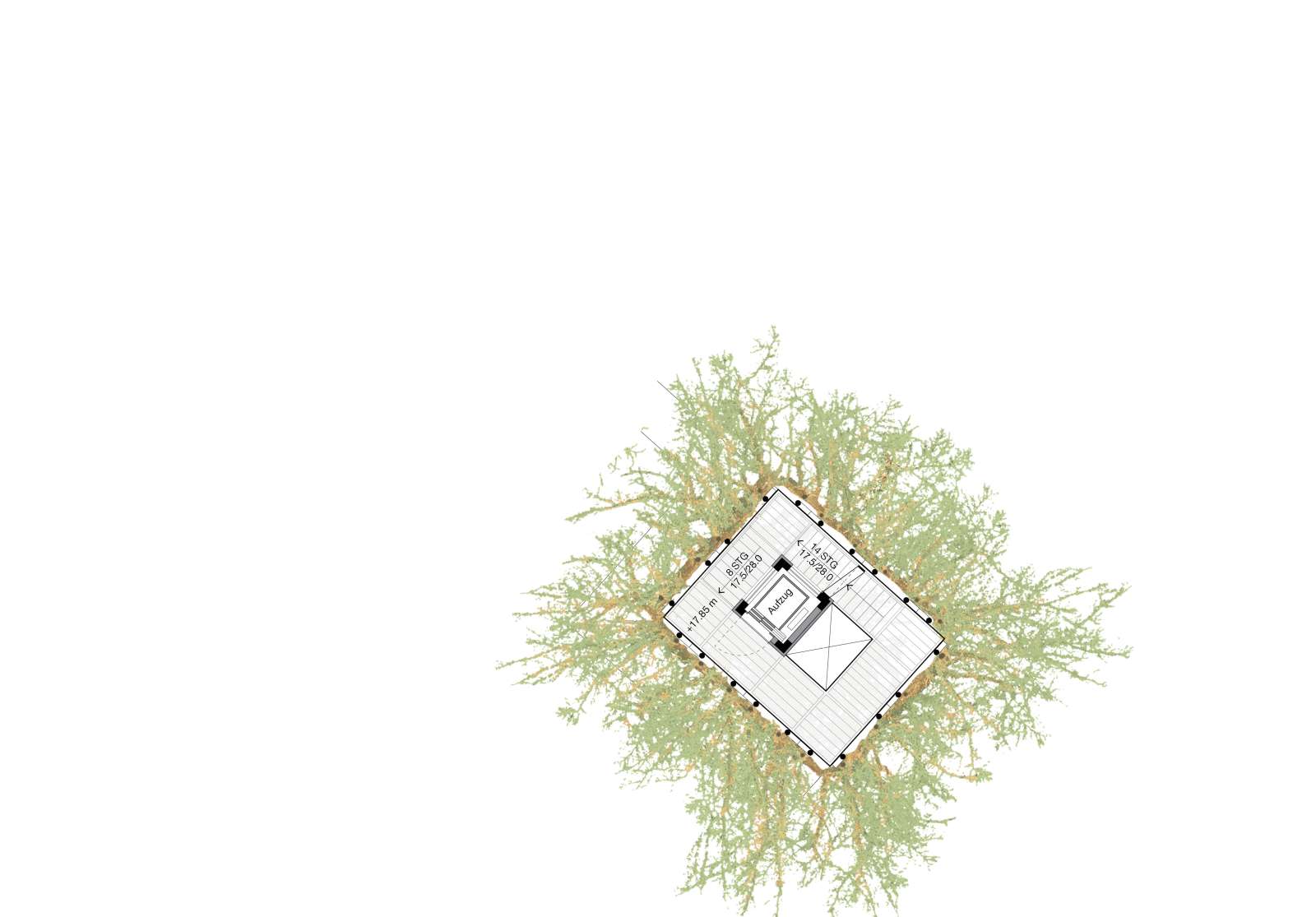
Floor plan 17,85m
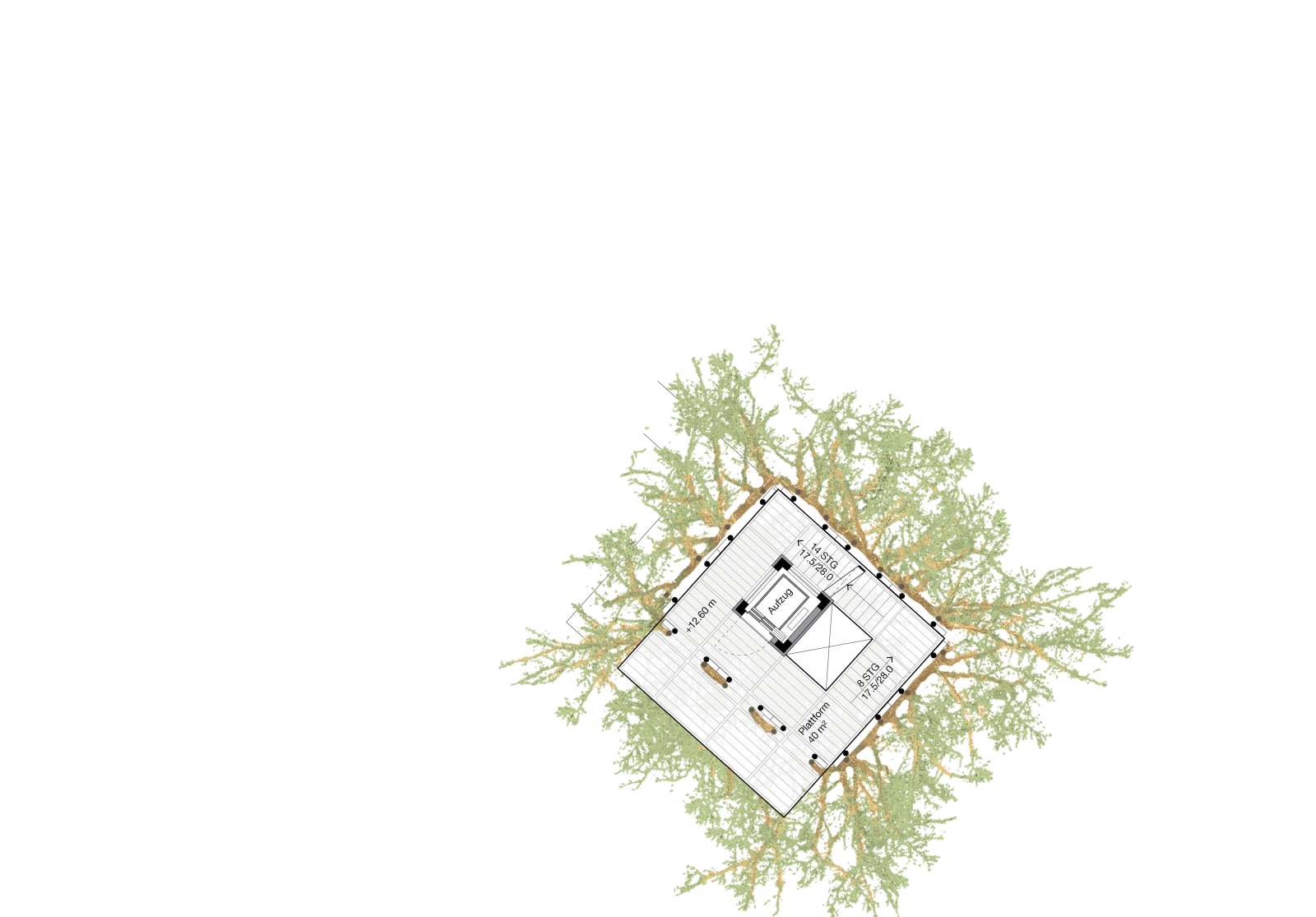
Floor plan 12,60m
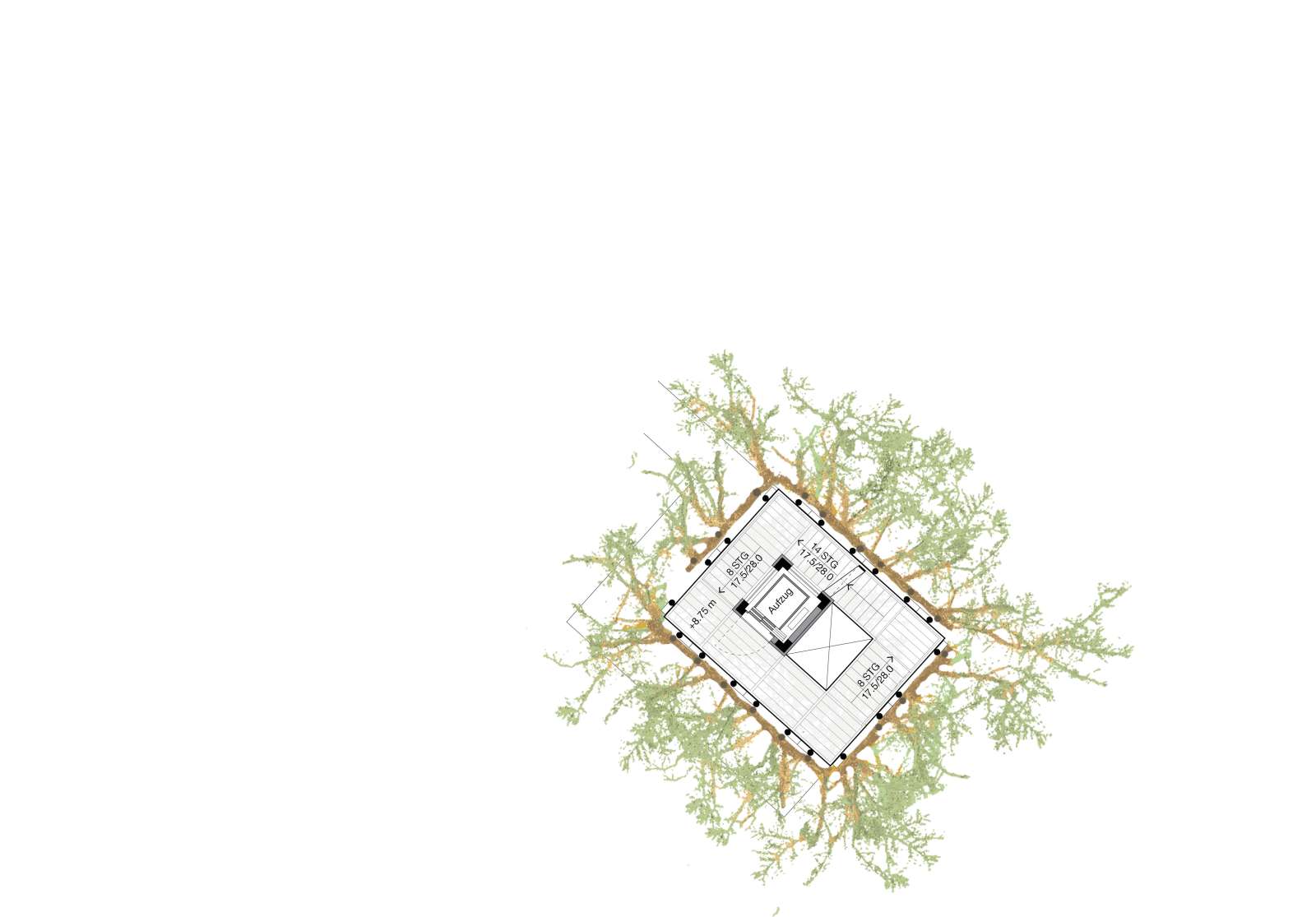
Floor plan 8,75m
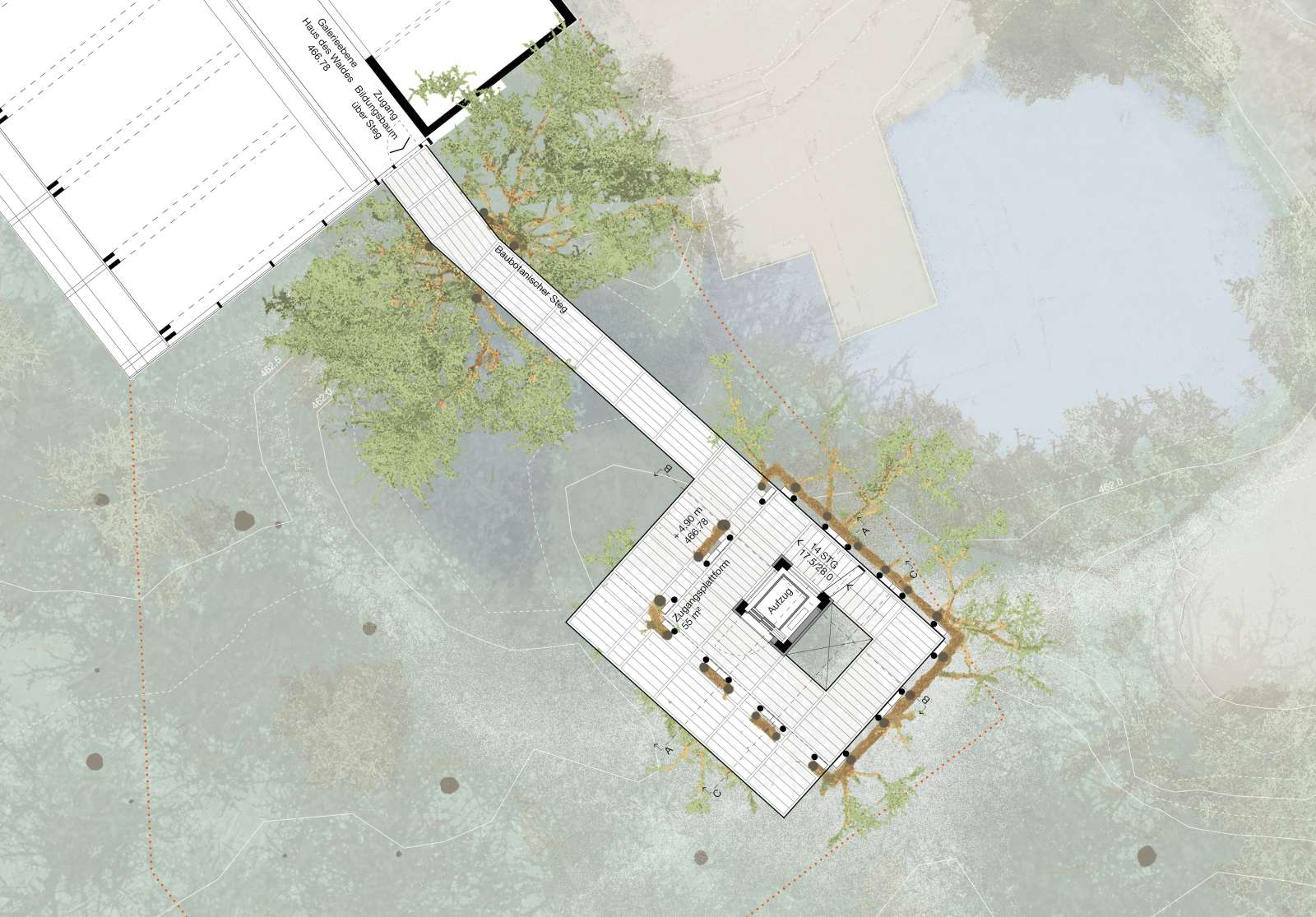
Floor plan 4,90m
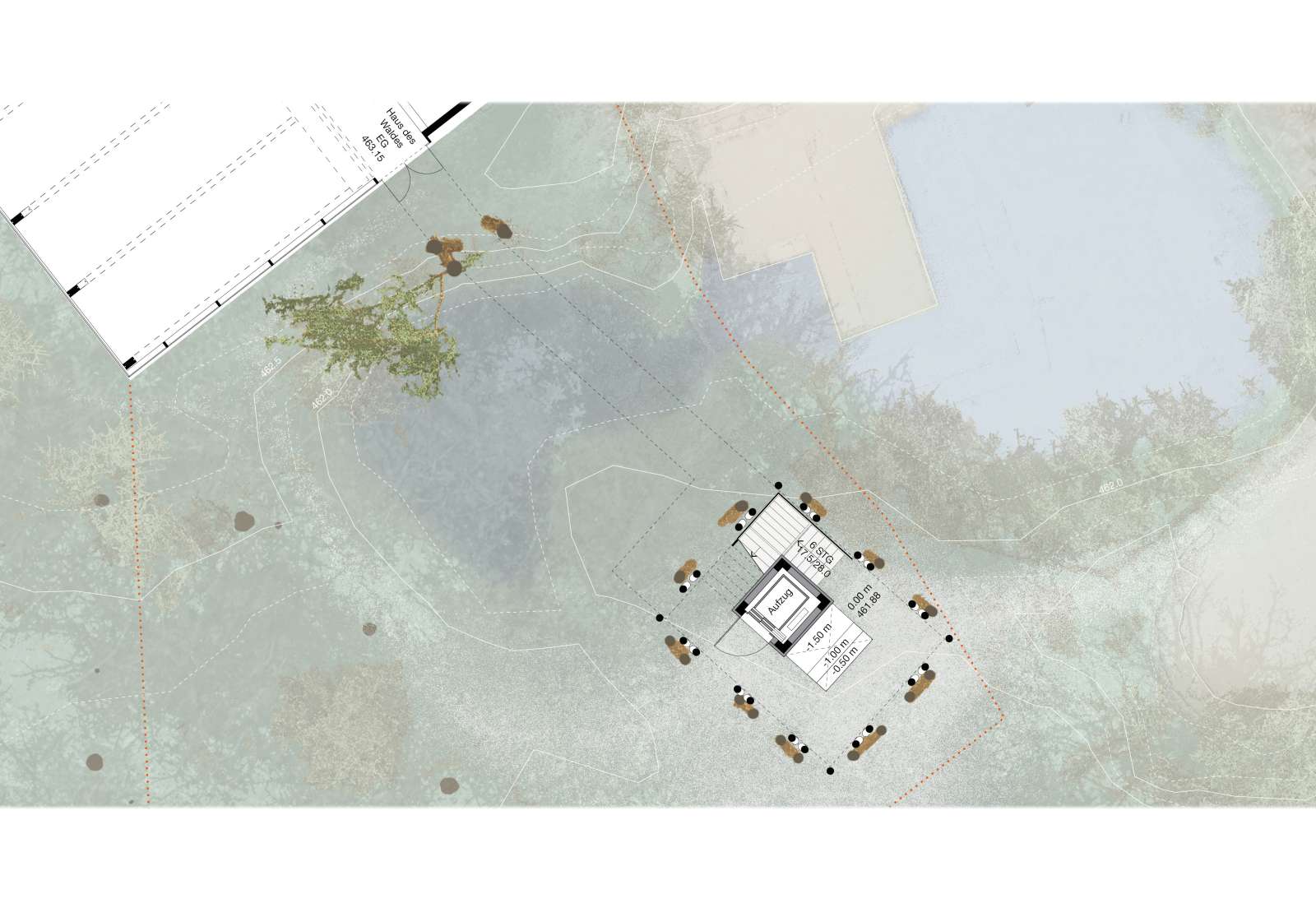
Floor plan 0,00